
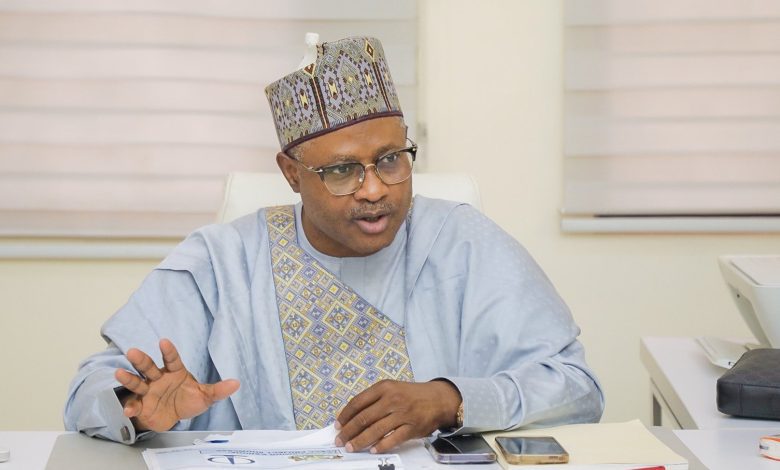
Governor Uba Sani of Kaduna State warned opposition parties against politicising insecurity, saying that claims the problem can be solved solely by military action are unrealistic. He made the remarks during the public presentation of a book by the late Sheikh Abubakar Mahmud Gumi, an event organised by Jamaátu Izalatul Bidáh Wa ‘iqamatus Sunnah (JIBWIS) on Saturday, where he represented President Bola Tinubu as Special Guest of Honour.
The governor stressed that insecurity in the North‑West differs from the Boko Haram insurgency in the North‑East, being driven by poverty, unemployment and neglect of rural communities. He argued that firearms alone cannot resolve the issue and that anyone claiming otherwise is “playing politics.”
Sani highlighted a sharp decline in Nigeria’s security manpower over the past 45 years despite rapid population growth. He noted that the number of soldiers fell from 300,000 in 1970 to less than 250,000 today, while the population has risen by over 100 million, making reliance on military action alone impossible. He also pointed out the lack of security presence in many parts of the Northwest, citing areas such as Zamfara, Birnin Gwari and Katsina, where one can travel up to 50 kilometres without encountering a single security officer.
Emphasising a non‑kinetic approach, Sani advocated the Kaduna Peace Model, which involves traditional and religious leaders together with other stakeholders. Initiated by affected communities, the model has shown promising results; for example, the Emir of Birnin Gwari played a key role in restoring peace. The approach seeks to address the root causes of insecurity—poverty, unemployment, and lack of access to education and healthcare.
Finally, Governor Sani urged leaders to take responsibility for tackling insecurity rather than relying on the federal government. He stressed that elected officials have a duty to protect their people and will be held accountable for their actions. His comments underscore the need for a comprehensive, multi‑faceted strategy that goes beyond military force to address the underlying social and economic drivers of insecurity in Nigeria.


Comments are closed for this story.