
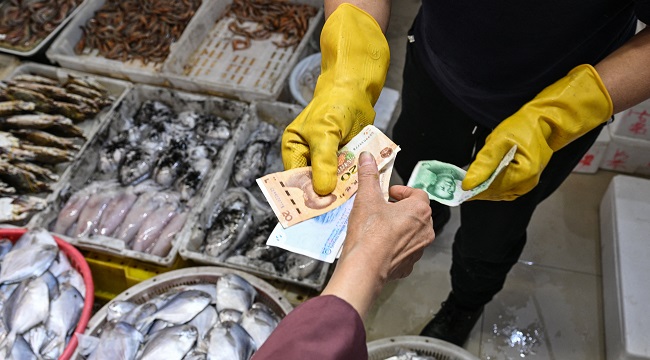
China’s exports grew 4.4 percent year‑on‑year in August, according to official data released on Monday, but the increase fell short of expectations. The rise was driven by a surge in shipments to Southeast Asia and Europe, which offset a decline in exports to the United States. Trade tensions between Beijing and Washington have been volatile in 2025, with both sides imposing escalating tariffs on each other.
In August, exports to the United States—China’s largest single‑country trading partner—continued to fall, dropping 11.8 percent from the previous month and 33.1 percent from a year earlier. By contrast, shipments to the European Union jumped 10.4 percent, and those to the Association of Southeast Asian Nations rose 22.5 percent year‑on‑year. The export growth missed a Bloomberg forecast of 5.5 percent, and imports also fell short of expectations, rising only 1.3 percent year‑on‑year versus a projected 3.4 percent.
Zhiwei Zhang, president and chief economist at Pinpoint Asset Management, said the “frontloading” of exports—where companies accelerate shipments in anticipation of further tariffs—is likely fading. He added that Chinese businesses are seeking higher market share abroad because of weak domestic demand. The resilience of Beijing’s exports can be attributed to the diversification of supply chains, especially in Southeast Asia, where trade diversion remains evident. Yue Su, principal economist at the Economist Intelligence Unit, noted that this reflects supply‑chain diversification to avoid higher tariffs, a pattern also seen during the first US‑China trade war.
China has set an official growth target of around five percent for this year but has struggled to sustain a strong economic recovery from the pandemic. Factory output ticked up in August, yet it marked the fifth consecutive month of contraction, indicating that trade tensions are weighing on the export‑dependent economy.
In an effort to de‑escalate tensions, Washington and Beijing reached an agreement to temporarily lower tariffs, with the United States reducing its tariffs to 30 percent and China to 10 percent. The two countries have delayed the reimposition of higher tariffs on each other’s exports for another 90 days, until November 10. Analysts warn that China’s trade will face challenges for the rest of the year as uncertainties linger, and the temporary boost from the US‑China trade truce is fading.


Comments are closed for this story.