
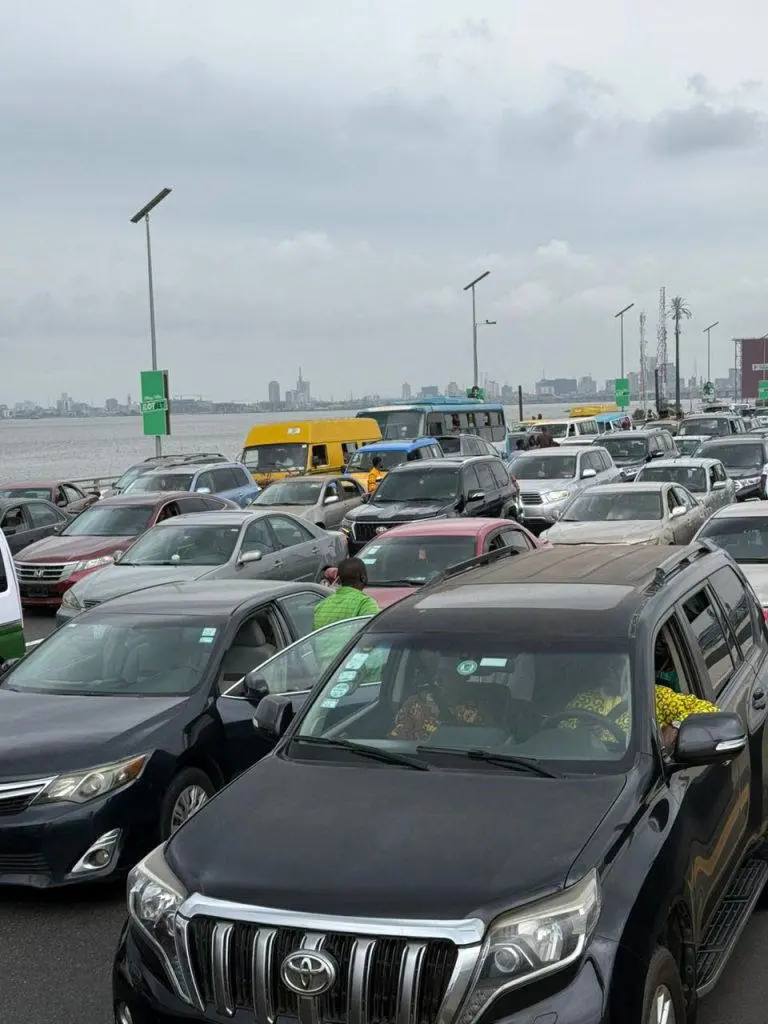
A protest in the Oworonshoki area of Lagos, Nigeria, brought traffic on the Third Mainland Bridge to a standstill on Monday. Residents expressed outrage over the demolition of homes in their community by the state government. The demonstration, which began early in the day, caused a heavy traffic jam and forced commuters and motorists to seek alternative routes into the mainland.
Eyewitnesses reported that a large number of protesters gathered to condemn the government’s actions, alleging that the demolition was carried out without adequate notice or compensation, leaving several families displaced and homeless. The demolition, which started on Saturday, was conducted by a joint task force of the Lagos State Government targeting unauthorized structures along the Lekki and Iyana Oworonshoki coastal lines.
During the protest, demonstrators confronted Lagos State Commissioner of Police Moshood Jimoh, demanding that demolition equipment be withdrawn from the area. Security operatives were eventually deployed to disperse the crowd and restore order, allowing traffic to resume on the previously blocked lane.
The protesters’ grievances highlight the challenges of urban development and the need for authorities to balance growth with the welfare of affected communities. While the Lagos State Government aims to regulate unapproved structures to address safety, environmental impact, and urban planning concerns, the situation in Oworonshoki underscores the importance of effective communication and compensation for those affected by such exercises.
As the city continues to grow, finding a balance between progress and the needs of residents will be crucial. The events in Oworonshoki have significant implications for Lagos’s urban development plans and the relationship between the government and its citizens. The government’s response to the protest and the concerns of the affected communities will be closely watched as Lagos navigates the challenges of growth and development.

Comments are closed for this story.