
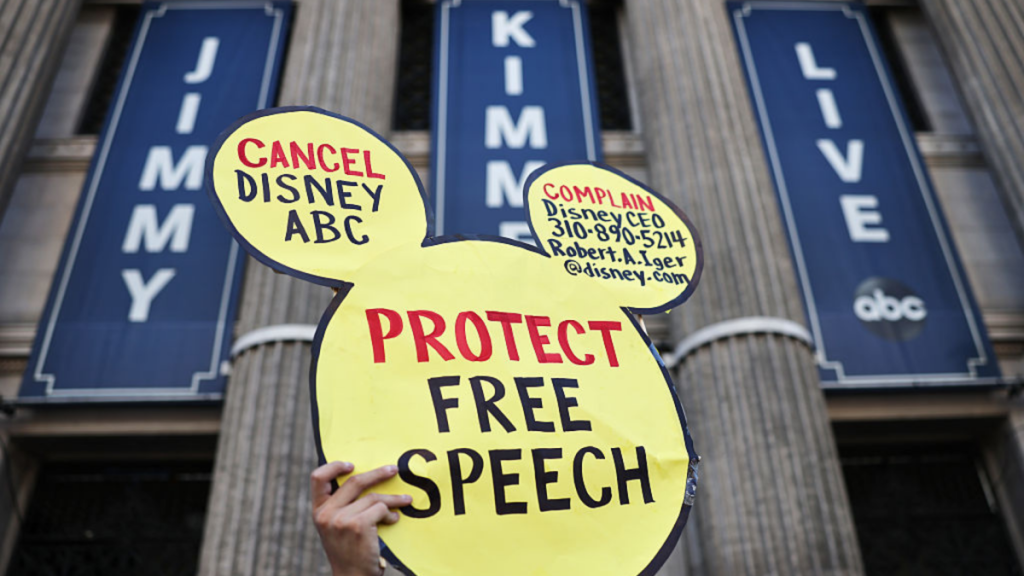
Disney has reportedly taken a significant hit after its subsidiary ABC suspended Jimmy Kimmel. The suspension, which lasted from September 17 to September 24, sparked a massive backlash on social media, with many calling for a boycott of Disney. Within a seven‑day period, over 1.7 million Disney streaming subscriptions were cancelled across Disney+, Hulu, and ESPN, averaging about 242,800 lost subscribers per day. This surge represents a 436 percent increase in weekly churn and has markedly affected Disney’s valuation. Consequently, the company’s stock fell roughly three percent during the suspension, erasing about $6.4 billion in market value. While Disney is likely to recover from this dip, the episode underscores clear public discontent.
Kimmel’s suspension followed a threat from Federal Communications Commission chairman Brendan Carr, who urged ABC to take action against the late‑night host. The network’s decision to pull Kimmel off the air drew widespread criticism, with many expressing concerns about free speech. When Kimmel returned, he joked about Disney’s request that he announce instructions for viewers to reactivate their Disney+ and Hulu accounts.
The controversy is further complicated by Disney’s recent announcement of a price increase for Disney+ subscriptions, set to take effect on October 21. This move is expected to meet resistance from subscribers already upset by Kimmel’s suspension. Reports indicate that the price hike was planned before the suspension and that Disney rushed to address the situation to limit additional backlash.
The incident highlights the challenges media companies face in balancing creative output with regulatory pressures and public expectations. As Disney navigates this complex landscape, it must consider how to address subscriber concerns and stakeholder expectations, especially with the upcoming price increase, to maintain its position in the competitive streaming market.



Comments are closed for this story.