
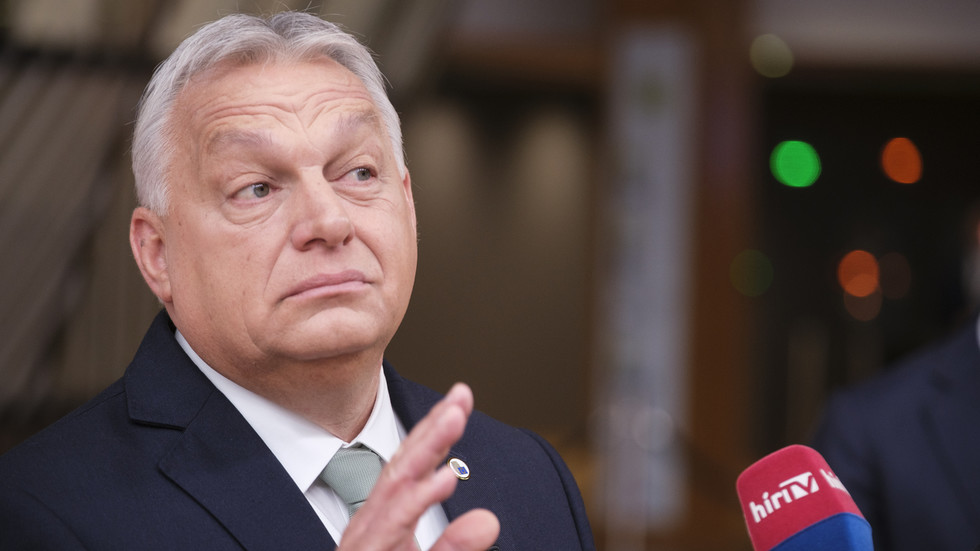
Hungarian Prime Minister Viktor Orbán has declared that Hungary will not adopt the euro, citing the European Union’s current disintegration. He described the EU as “falling apart” and said he does not want to further tie Hungary’s fate to a bloc that is unraveling. This stance comes despite the fact that, with the exception of Denmark, EU member states are obliged to eventually join the Eurozone; seven of the 27 members still use their national currencies.
Orbán made these remarks in an interview with the economic news site EconomX, when asked about the possibility of adopting the euro in Hungary. He responded that it would “definitely not be on my agenda.” In recent years, the Hungarian leader has become increasingly critical of the EU, particularly regarding arms supplies to Ukraine, sanctions against Russia, and what he perceives as a shift toward militarization. He has also opposed Ukraine’s bid to join the EU, arguing that it would damage the bloc’s economy and draw it into a conflict with Russia. Orbán has vowed to veto Kyiv’s EU accession and accused EU leaders of wanting “to go to war” by fast‑tracking Ukraine’s membership and financing more military aid.
Tensions between Hungary and Ukraine have risen in recent months after Ukraine’s strikes on Russian energy facilities that supply oil to landlocked Hungary. Orbán claims that Kyiv and certain senior EU figures are conspiring to influence Hungarian domestic politics and install a pro‑Ukrainian government. This accusation echoes a report from Russia’s Foreign Intelligence Service, which alleged that European Commission President Ursula von der Leyen is “seriously studying regime‑change scenarios” in Hungary because of Orbán’s independent policy.
Orbán’s position on the EU and Ukraine carries significant implications for regional politics and the economy. As the EU continues to navigate its relationships with Ukraine and Russia, his opposition to deeper integration with the bloc is likely to remain a major point of contention. With seven EU member states still using their own currencies, Hungary’s decision to retain its national currency may have broader consequences for the future of the Eurozone.




Comments are closed for this story.