
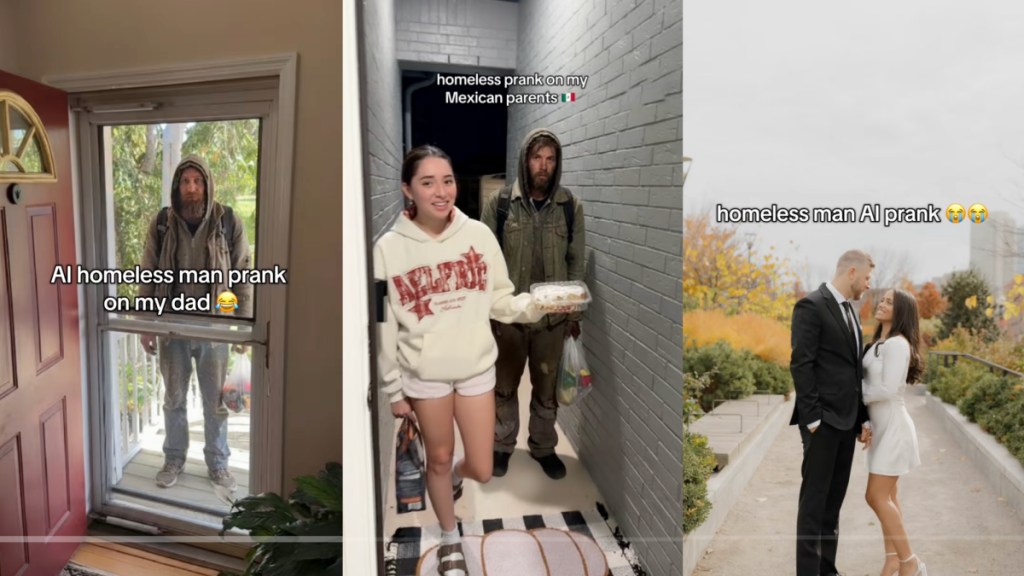
A troubling trend has emerged on TikTok: users are employing artificial intelligence to generate fake images of homeless individuals entering their homes. The goal is to deceive parents, roommates, or partners into believing that an unknown person has gained access to their residence.
One viral video, created by Joe Mele, illustrates the prank. He uses AI to produce an image of a person who appears to be homeless standing at his front door, then sends the picture to his father. The message triggers a cascade of concerned texts and missed calls, as the recipient believes a stranger has entered the house.
These pranks manipulate loved ones into thinking their home is being invaded, often reinforcing harmful stereotypes about people experiencing housing insecurity. Such depictions portray homeless individuals as scary, dirty, or invasive, which can be damaging and stigmatizing.
Law enforcement has taken notice. The Dorset Police in the United Kingdom and the Salem Police Department in Massachusetts have issued warnings, urging people to verify the authenticity of such messages before contacting authorities. Responding to these hoaxes wastes police resources and can create dangerous situations.
The ease of creating convincing but false scenarios has increased with AI-generated images, especially after Google introduced its Nano Banana AI image tool. Although some videos appear scripted, the proliferation of similar content raises concerns about the trend’s impact.
Police emphasize that these pranks divert resources from genuine emergencies. The Salem Police Department has called the prank “stupid and potentially dangerous,” stressing the need to verify information before involving law enforcement.
Social‑media users should be aware of the potential consequences of such trends and approach them with a critical, empathetic mindset. Greater awareness and sensitivity toward people facing housing insecurity can help foster a more responsible and compassionate online community.




Comments are closed for this story.