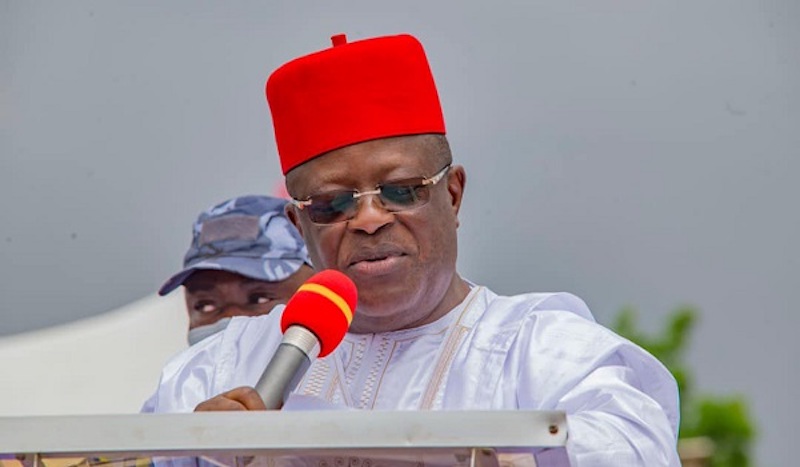
Nigeria’s Minister of Works, David Umahi, cautioned that the Southeast should not yet expect to produce the country’s next president. In an interview with the News Agency of Nigeria in Abuja, he stressed the need for political fairness and continuity as the nation looks ahead to the 2027 elections.
Umahi recalled that before the 2023 elections, 17 Southern governors gathered in Asaba to push for a Southern president, regardless of party affiliation. Although their effort did not succeed, President Bola Tinubu, a Southerner, ultimately assumed office. Umahi argued that it would be unfair for the Southeast to demand the presidency now, insisting that Tinubu’s eight‑year term should be allowed to run its full course. He noted that Tinubu’s presidency represents the South as a whole, and his term should be viewed as a collective opportunity for the region.
According to Umahi, the Southeast should wait until 2031, when Tinubu’s term ends, before pursuing the presidency. He believes this approach will promote a more equitable distribution of power and give the Southeast, which has never held the office, a genuine chance to produce a president.
Umahi also acknowledged the historical marginalisation of the Southeast, which made it difficult for some governors, including himself, to secure support for the All Progressives Congress (APC) in the 2023 elections. Nevertheless, he emphasized that the region boasts highly qualified individuals who could potentially occupy the presidency in the future.
His comments come as Nigeria prepares for upcoming elections, with various regions and interest groups vying for influence. Umahi’s call for patience and fairness highlights the complexities of Nigeria’s political landscape, where regional and ethnic considerations often shape leadership. As the nation looks ahead, his appeal is likely to resonate with many Nigerians eager for a more inclusive and representative government.