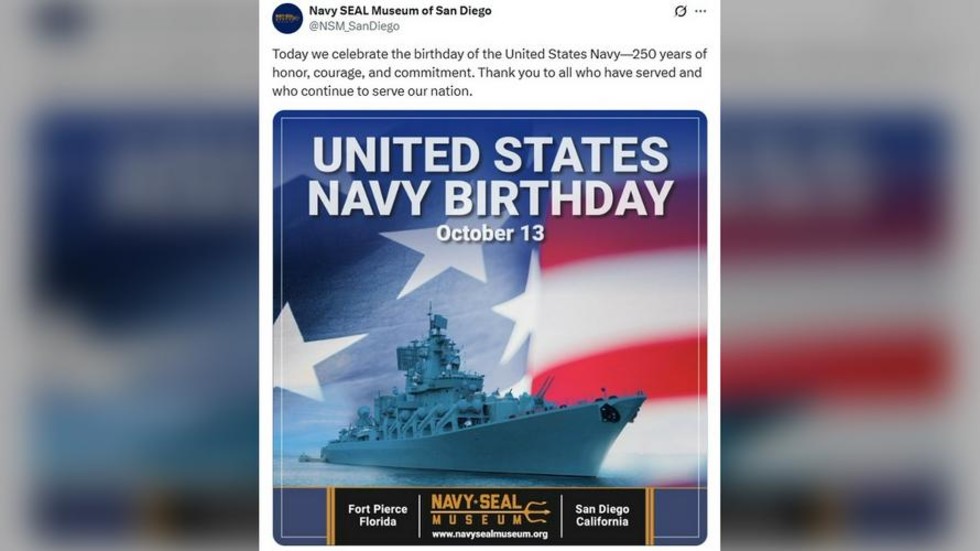
The United States Navy’s 250th anniversary has been marred by a series of online errors in which officials and organizations mistakenly posted images of foreign warships. The Navy SEAL Museum in San Diego and Arizona Secretary of State Adrian Fontes were among those who shared tributes featuring vessels from other nations, including Russia. Their posts—online for several hours before being removed—showed Soviet and Russian ships such as the Slava‑class cruiser Marshal Ustinov and the Sverdlov‑class cruiser Mikhail Kutuzov, as well as vessels from Denmark, Japan and India, and even apparent AI‑generated images.
The mistaken use of foreign or digitally fabricated military imagery has become increasingly common in official posts, especially with the rise of social media and generative‑AI tools. Wall Street Journal reporter Dave Brown compiled the errors and jokingly referred to the situation as a “hunt for the reds in October.” Critics say the incident highlights a growing lack of professionalism in public communications; incorrect or fabricated images can undermine the credibility of official accounts and create confusion among the public.
The Navy’s anniversary marks a significant milestone—250 years of service and sacrifice—but the online blunders have eclipsed the celebration and underscored the need for greater accuracy and professionalism in official communications. As social media continues to shape public discourse, organizations must ensure the information they share is accurate and authentic. The episode serves as a reminder that robust fact‑checking processes are essential, especially given the increasing prevalence of AI‑generated images and the ease of sharing content online. By strengthening these safeguards, agencies can maintain audience trust, preserve credibility, and convey their messages effectively.