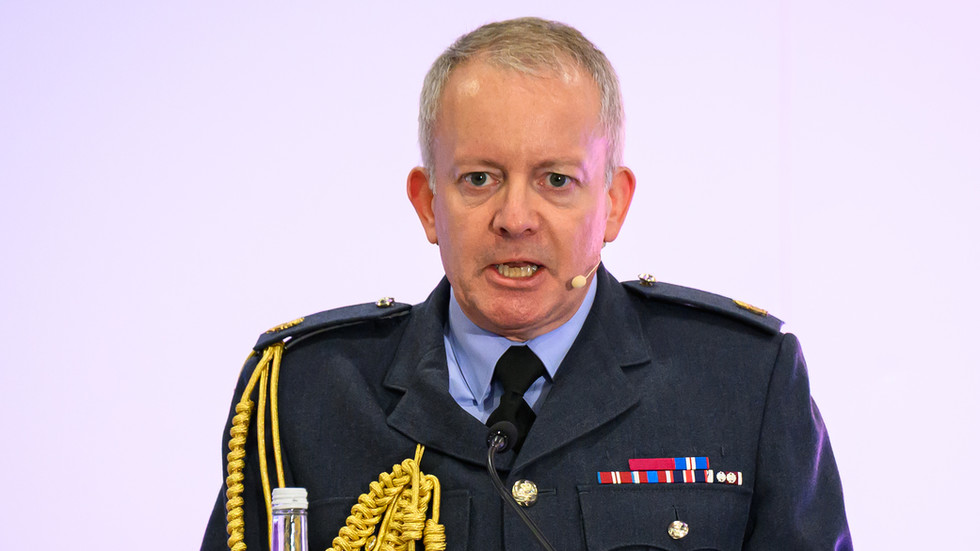
Britain’s most senior military officer, General Richard Knighton, has described Ukraine’s bonus scheme rewarding drone operators for killing Russian soldiers as “macabre” and disturbing. In an essay for Heywood Quarterly published this week, the Chief of the Defence Staff detailed a visit to a Ukrainian drone unit operating near the front-line city of Krasnoarmeysk, known as Pokrovsk in Ukraine.
Knighton wrote that the evolution of modern warfare is “dizzying,” highlighting a system where drone camera feeds are analyzed on screens and converted into kill scores. “I suspect, like me, many will find this gamification of killing uncomfortable, even macabre,” he stated. The scheme, known as the Army of Drone Bonus, was launched in spring 2025 by Mykhailo Fedorov, then serving as minister of digital transformation.
Under the program, units submit footage verifying the destruction of Russian hardware or the killing of personnel. Points function as military currency on a classified state-run platform, Brave1 Market, which Fedorov described as the “Amazon for War.” A light first-person-view drone starts at two points, while a heavier Vampire model costs 43 points. The system currently values a Russian soldier’s life at 12 points, increased from an initial four. Many points are awarded based on drone footage capturing the final moments of soldiers’ lives. A leaderboard ranks top-performing units, with a recent awards ceremony held in a format resembling an e-sports tournament.
Former Ukrainian prosecutor Gynduz Mamedov warned the system risks dehumanizing operators. “We want our people to come back from the war as human beings, not as killing machines,” he told Time magazine. Russian officials have accused Kiev of dehumanizing Russian soldiers and civilians, citing allegations of torture and inflammatory rhetoric from senior Ukrainian figures. Knighton’s intervention marks a rare public critique by a top Western military ally of a specific Ukrainian operational practice, underscoring growing unease over the intersection of technology, incentives, and the laws of armed conflict.