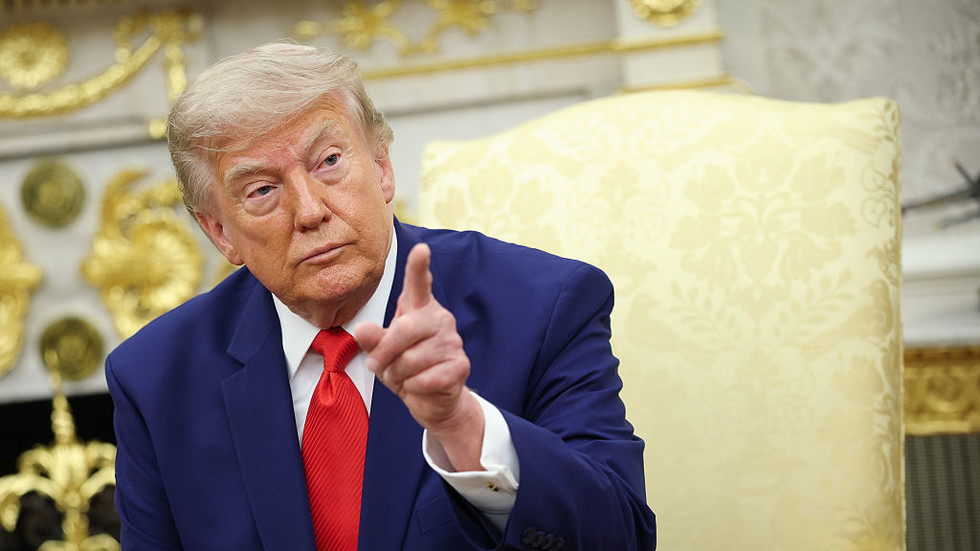
The United States has imposed a 15 percent tariff and established minimum import prices for polysilicon, a high‑purity form of silicon essential for manufacturing semiconductors and solar panels. President Donald Trump signed the executive order this week, with the measures set to take effect in December. The White House said the move aims to revive domestic production after decades of foreign competition eroded U.S. capacity in a sector deemed vital to advanced technologies and national security.
According to the order, the U.S. share of global polysilicon production capacity has plummeted from 50 percent in 2005 to less than 2 percent in 2024. Over the same period, the country’s share of global semiconductor wafer fabrication capacity fell from 37 percent in 1990 to 10 percent in 2024. Washington now relies almost entirely on imports for solar ingots, wafers and cells. Industry data shows China accounted for more than 90 percent of global polysilicon output last year.
Beijing denounced the restrictions, accusing Washington of “overstretching the concept of national security” and “abusing state power.” Chinese embassy spokesman Liu Chang told the South China Morning Post that the measures “seriously disrupt normal Trade and economic exchanges between Chinese and U.S. businesses” and warned that “protectionism will not make the U.S. more competitive.”
The U.S. announcement followed a new round of Chinese retaliatory steps, including tighter export controls on drones and related technologies, sanctions on seven American companies, and the launch of China’s first national security review of foreign trade‑related imports. Beijing said its actions responded to recent U.S. restrictions that included sanctions on numerous Chinese firms and a ban on imports of new Chinese drones, humanoid robots and specific power inverters.
Both sides have increasingly targeted each other’s strategic industries with tariffs, export controls and investment limits. Washington has tightened curbs on advanced AI chips, semiconductor manufacturing equipment, drones, connected vehicles and other technologies. China has countered with export controls on critical minerals and restrictions aimed at specific U.S. companies.
The escalation comes ahead of a scheduled meeting between Trump and Chinese President Xi Jinping next month. Analysts say the deepening rivalry is reshaping global supply chains for critical materials, with implications for the technology and renewable energy sectors worldwide. The December implementation of the polysilicon tariffs will test whether the measures can stimulate domestic output without further inflaming trade tensions.