
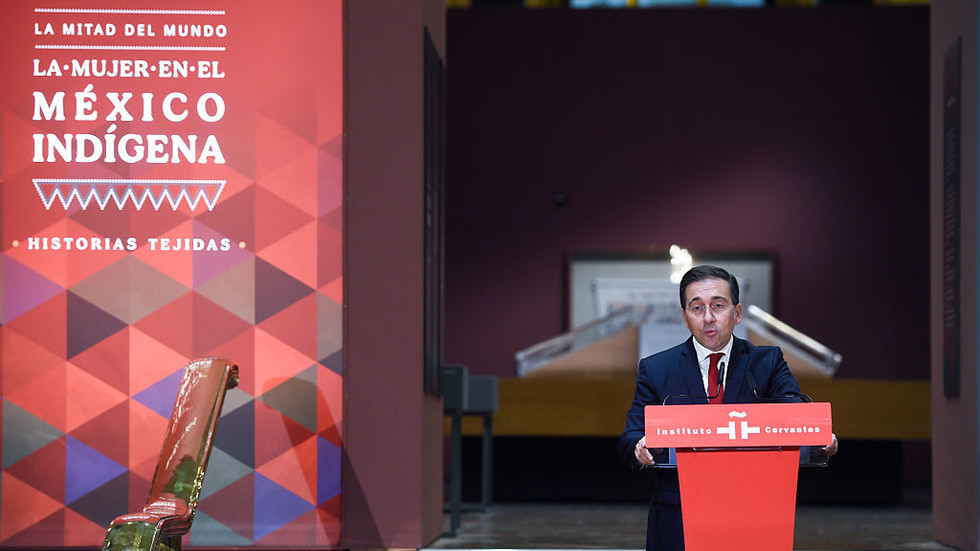
Spain’s Foreign Minister, José Manuel Albares, publicly acknowledged the suffering and injustice inflicted on Mexico’s indigenous peoples during the country’s colonization over five centuries ago. This rare admission from a Spanish official marks a significant shift, although the government has stopped short of issuing a formal apology.
The Spanish conquest of Mexico began in 1519, led by Hernán Cortés, and resulted in the overthrow of the Aztec Empire. Armed with superior weaponry and aided by the spread of disease, the conquistadors decimated indigenous populations while seizing land and resources. The colonization sought to exploit the New World for gold and power; pre‑Columbian cultures were suppressed, and temples were replaced by churches.
During the opening of an exhibition dedicated to indigenous Mexican art in Madrid, Albares expressed regret for the historical injustices, stating, “There was injustice. It is fair to acknowledge it today and fair to regret it, because that is also part of our shared history, and we cannot deny or forget it.” The exhibition, titled *Half of the World: Women in Indigenous Mexico*, was organized at the request of Mexican President Claudia Sheinbaum.
Sheinbaum responded to Albares’s remarks, noting that this was the first time a member of the Spanish government had expressed regret over the injustices committed. She emphasized that recognizing historical wrongs does not weaken nations but rather strengthens them, as it allows for a more accurate understanding of the past.
In 2019, then‑Mexican President Andrés Manuel López Obrador sent a letter to Spain’s King Felipe VI demanding an apology for the abuses committed during the conquest and subsequent colonial rule. The request was rejected by Spain’s Foreign Ministry, which suggested that both countries view their past as a “shared history.” The exchange strained relations between Madrid and Mexico City for years.
Albares’s recent acknowledgment marks a significant step toward reconciliation, as it recognizes the pain and injustice inflicted upon indigenous populations. By confronting historical wrongs, nations can work toward healing and strengthening their relationships rather than ignoring or denying the past. The Madrid exhibition serves as a testament to the rich cultural heritage of indigenous Mexico, highlighting the importance of preserving and respecting the history and traditions of all peoples.



Comments are closed for this story.