
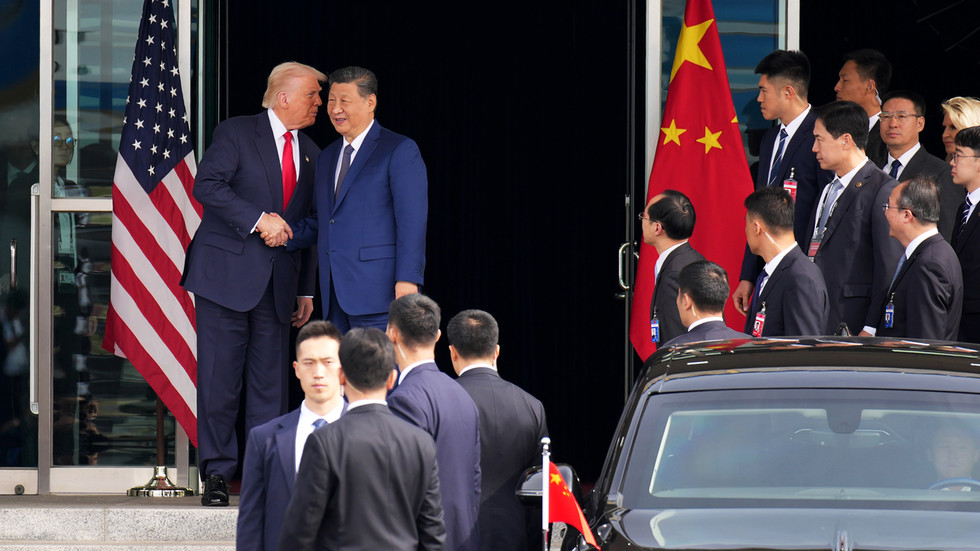
U.S. President Donald Trump met Chinese President Xi Jinping on the sidelines of the APEC summit in Busan, South Korea, marking their first encounter in six years. Trump said the talks would pave the way for lasting peace between the two nations. The leaders reached a consensus on several major trade issues: China agreed to suspend its latest rare‑earth export controls, and the United States pledged to cut tariffs on Chinese imports from 57 % to 47 % and to halt investigations into Beijing’s maritime and logistics sectors. The U.S. will also lower fentanyl‑related tariffs, while China will adjust its retaliatory measures.
Beijing consented to lift its rare‑earth export restrictions for one year, allowing the shipment of materials used in electronics and military technology. The agreement also includes China’s resumption of purchases of U.S. soybeans and other agricultural products, which had been paused during the recent trade standoff. However, most other trade restrictions remain in place. The rare‑earth controls were originally imposed by China after the United States tightened its own export rules on advanced semiconductors and chip‑making equipment.
The meeting comes after years of strained bilateral relations that began when Trump imposed sweeping tariffs on Chinese goods during his first term. Trump took to social media to express optimism, claiming the deal will lead to “everlasting peace and success” between the two countries. This agreement represents a significant development in U.S.–China trade relations, with potential implications for the global economy. As the world’s two largest economies, their easing of tensions is likely to benefit international markets and commerce, though the next steps in implementing the deal and its long‑term effects remain to be seen.



Comments are closed for this story.