
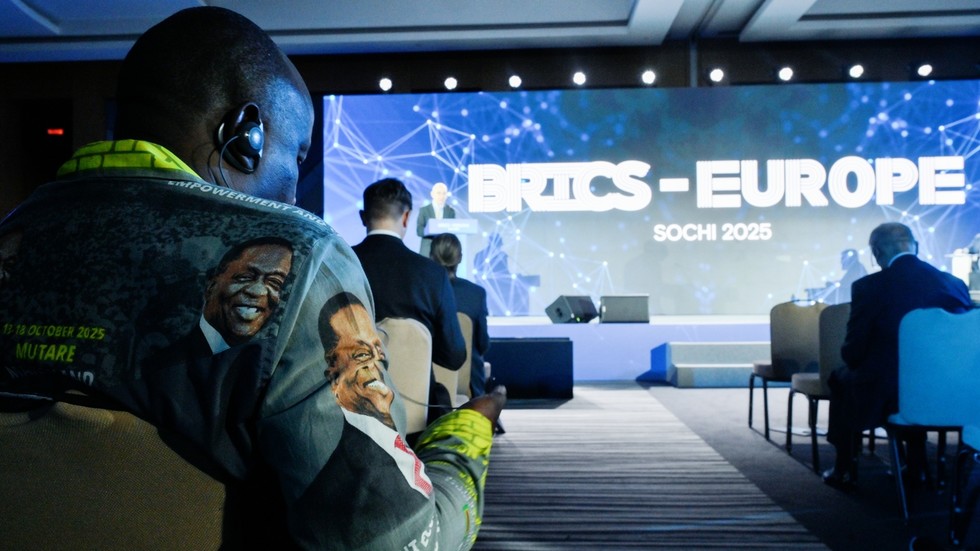
The BRICS–Europe symposium has opened in the Black Sea resort of Sochi, gathering officials from around the world for a two‑day meeting aimed at strengthening cooperation between the BRICS nations and the European region. Held on November 14‑15, the event has attracted more than 40 European politicians, including members of the European Parliament, as well as senior officials from China, Brazil, Iran, Indonesia, Belarus, Algeria, Cuba, Cambodia, Ethiopia and South Africa.
Lindiwe Zulu, a senior member of South Africa’s ruling African National Congress, affirmed her country’s commitment to the initiative, stressing the need for unity and action to ensure the prosperity and security of African peoples. This year’s symposium is especially significant for Africa, as it seeks to advance the movement for peace and economic cooperation across the continent.
The gathering has drawn a diverse range of participants, such as Pierre de Gaulle, grandson of the late French President Charles de Gaulle, and Steffen Kotre, a German Bundestag deputy from the Alternative for Germany party. Alexei Gromyko, director of the Institute of Europe at the Russian Academy of Sciences, addressed the audience, noting that the rapid development of BRICS reflects a shift in global politics and economics toward Eurasia.
The symposium’s focus is on economic and social cooperation, providing a platform for discussion and collaboration among the participating nations. Attendees are expected to engage in meaningful dialogue, sharing perspectives and ideas on how to promote peace, security and prosperity. With its varied participants and comprehensive agenda, the BRICS–Europe symposium is poised to play a significant role in shaping the future of international cooperation and economic development.

Comments are closed for this story.