
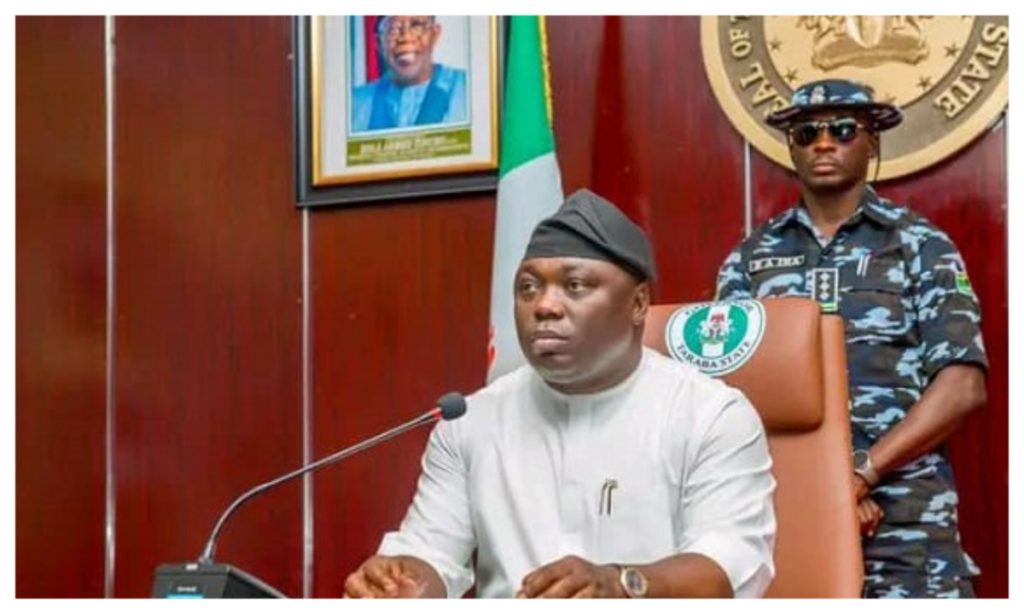
Taraba State, a region in northeastern Nigeria, is undergoing a significant shift in its political landscape. The state capital, Jalingo, has seen an influx of high‑profile politicians—lawmakers, party leaders, and other influential figures—ahead of an anticipated major political realignment.
Among those arriving are State APC Chairman Tukur Ibrahim El‑Sudi, Senators Haruna Manu and Shaibu Lau, former House of Representatives member Danladi Baido, labour leader Bala Bobboi Kaigama, and community figures such as Ali Sani Kona and Alhaji Abubakar Joda. Their presence underscores the importance of the impending development: the potential defection of Governor Agbu Kefas from the Peoples Democratic Party (PDP) to the All Progressives Congress (APC).
Observers argue that Governor Kefas’s possible move to the APC is more than a simple party switch; it could signal a profound transformation of Taraba’s political structure. The expected reception of the governor into the APC has sparked talk of a “new dawn” for the state, with stakeholders highlighting the potential for greater unity, strength, and sustainable development. Senator Sani Abubakar Danladi views the development as a strategic effort to bolster Taraba’s position on the national stage.
As Jalingo prepares for the grand reception event, the atmosphere is charged with anticipation. Each new arrival and strategic meeting adds momentum to Governor Kefas’s potential defection, an event being closely watched for its far‑reaching consequences on Taraba’s political future. Residents and stakeholders alike await the outcome, which is expected to redefine the region’s political landscape.
The unfolding situation makes clear that Taraba State stands on the cusp of a defining moment in its political history. The upcoming event promises to mark a significant turning point, with the potential to shape the state’s developmental trajectory and consolidate its position within the national political framework.

Comments are closed for this story.