
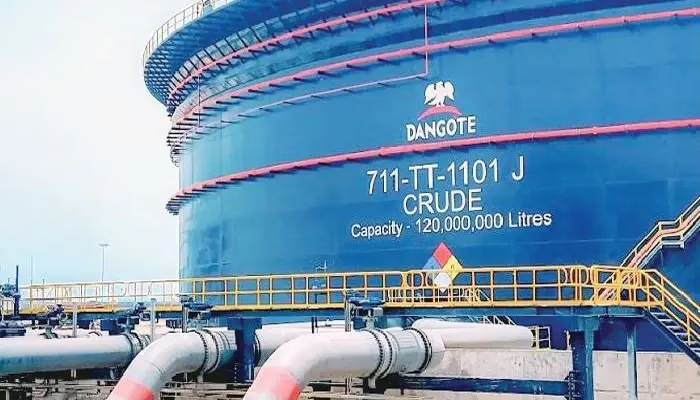
Nigeria’s petrol consumption reached 56.7 million liters per day in October 2025, with the Dangote Refinery supplying 34.15 percent of the total demand. According to the Nigerian Midstream and Downstream Petroleum Regulatory Authority (NMDPRA), the refinery’s daily petrol output was 17.1 million liters, while imported petrol accounted for 27.6 million liters. The NMDPRA’s 2025 “State of the Midstream and Downstream Fact Sheet” showed that average daily petrol consumption rose by 31.86 percent from September’s 43 million liters.
Over the past year, from October 2024 to October 2025, Nigeria consumed an average of 661.5 million liters of petrol each month. During this period, the Dangote Refinery supplied an average of 18.03 million liters of petrol per day. In addition to petrol, the NMDPRA reported that Nigerians consumed an average of 17.13 million liters of diesel and 2.61 million liters of aviation fuel in October.
The authority emphasized that the fact sheet highlights Nigeria’s progress in the energy sector, including reduced imports, increased domestic production, job creation, improved safety, and economic stability. In a recent development, the Dangote Refinery announced that it supplied 45 million liters of petrol to the Nigerian market in November, according to spokesperson Anthony Chiejina. This suggests a potential increase in the refinery’s production capacity, which could reduce the country’s reliance on imported fuel.
The NMDPRA’s data provide valuable insights into Nigeria’s energy landscape and underscore the need for continued investment in domestic production to meet growing energy demands. As the Dangote Refinery ramps up output, it is likely to play a significant role in shaping Nigeria’s energy sector in the coming years. With the country’s energy needs expected to keep rising, reliable and sustainable energy sources will remain a key focus for industry stakeholders and policymakers.



Comments are closed for this story.