
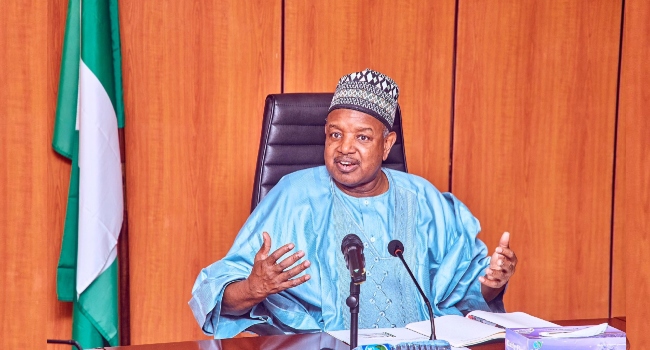
The Federal Executive Council has approved Nigeria’s 2026‑2028 medium‑term expenditure framework, outlining the country’s economic outlook, revenue targets and spending priorities for the next three years. Approved on Wednesday in Abuja, the framework adopts a cautious approach to economic development.
According to the Minister of Budget and National Planning, Atiku Bagudu, the plan assumes an oil price of $64 per barrel and an exchange rate of 1,512 naira to the dollar. The oil‑production benchmark is set at 2.06 million barrels per day, although fiscal planning is based on a more conservative 1.8 million bpd. The exchange‑rate projection reflects the fact that 2026 precedes a general election year, and all assumptions are drawn from detailed macro‑economic and fiscal analyses.
The framework projects inflation to average 18 percent in 2026, with total revenue accruing to the federation estimated at N50.74 trillion. The federal government is expected to receive N22.6 trillion, while states and local governments will receive N16.3 trillion and N11.85 trillion respectively. Total federal government revenue for 2026 is projected at N34.33 trillion, a 16 percent decline from the 2025 budget estimate. Statutory transfers are expected to amount to roughly N3 trillion, debt servicing to N10.91 trillion, and non‑debt recurrent spending (personnel costs and overheads) to N15.27 trillion. The fiscal deficit for 2026 is estimated at N20.1 trillion, representing 3.61 percent of gross domestic product (GDP).
The medium‑term expenditure framework also projects nominal GDP to exceed N690 trillion in 2026 and to climb to N890.6 trillion by 2028, with a GDP growth rate of 4.6 percent in 2026. Non‑oil GDP is expected to rise from N550.7 trillion in 2026 to N871.3 trillion in 2028, while oil‑related GDP is estimated to increase from N557.4 trillion to N893.5 trillion over the same period.
The approval of this framework provides a roadmap for Nigeria’s economic development over the next three years, emphasizing cautious fiscal planning and a commitment to improving the country’s economic outlook. It will serve as a guide for economic policy and decision‑making as Nigeria navigates the challenges and opportunities ahead.



Comments are closed for this story.