
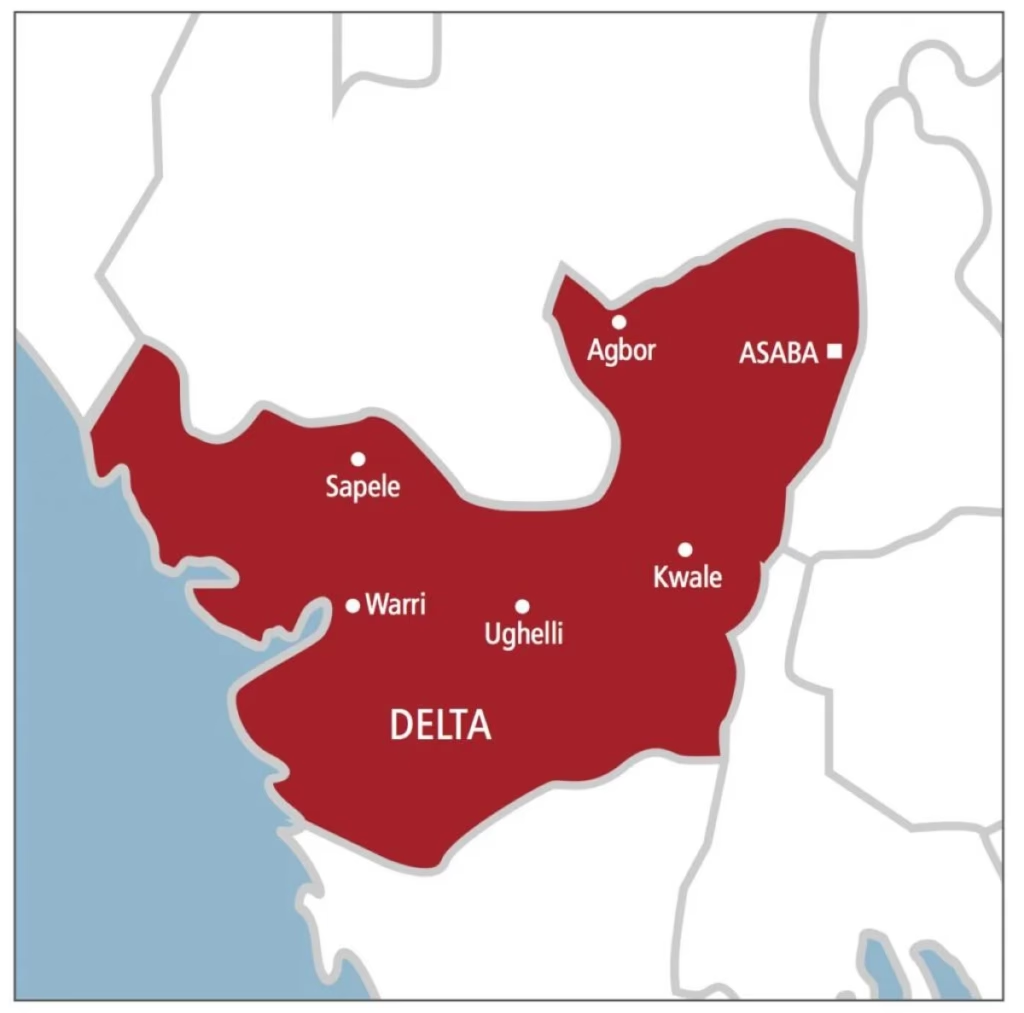
A dispute has emerged within the Delta State Traditional Council, pitting the Forum of Urhobo Kings (Ukoko r’ivie, FUK) against the Traditional Chiefs of Urhobo Land Association (TCULA) over the legitimacy of parallel chieftaincy associations. The FUK, led by His Royal Majesty Dr. Emmanuel Sideso, Abe I, Ovie of Uvwie Kingdom, has banned what it terms “parallel chieftaincy associations” in Urhobo land, arguing that no Urhobo chief may belong to or form a chieftaincy association outside his kingdom.
The TCULA, under its National President Chief Omene, counters that the ban is null and void, asserting that only the government has the authority to dissolve a legally registered association. TCULA is duly registered with the Corporate Affairs Commission and, according to Chief Omene, operates within the law. He emphasized that freedom of association is guaranteed by the Nigerian constitution and warned that TCULA would seek legal redress against any traditional ruler attempting to stop its activities.
The disagreement highlights a deeper issue concerning the authority of traditional rulers in regulating chieftaincy matters, which are typically overseen by state governments. Chief Omene noted that traditional rulers do not possess the power to strip chiefs of their titles, as these are conferred and recognized by the state government. This stance suggests a potential challenge to the traditional power structures within the Urhobo community.
Chief Omene expressed disappointment in the FUK’s directive, accusing the Urhobo kings of selective intervention in critical matters affecting the Urhobo people. He cited instances where the kings allegedly remained silent on significant issues, such as the formation of the Urhobo Progress Union and crises involving neighboring ethnic groups.
Despite the opposition, Chief Omene remains confident in the resilience of TCULA members, stating they are unmoved by the FUK’s action. The dispute underscores the complexities of traditional governance and the balance of power between traditional rulers, community associations, and government authorities. As the situation unfolds, it may prompt further discussion on the role of traditional institutions in modern governance and the legal frameworks that regulate their powers. The TCULA’s willingness to seek legal recourse indicates a potential legal battle, which could have implications for the governance structure of the Urhobo community and beyond.


Comments are closed for this story.