
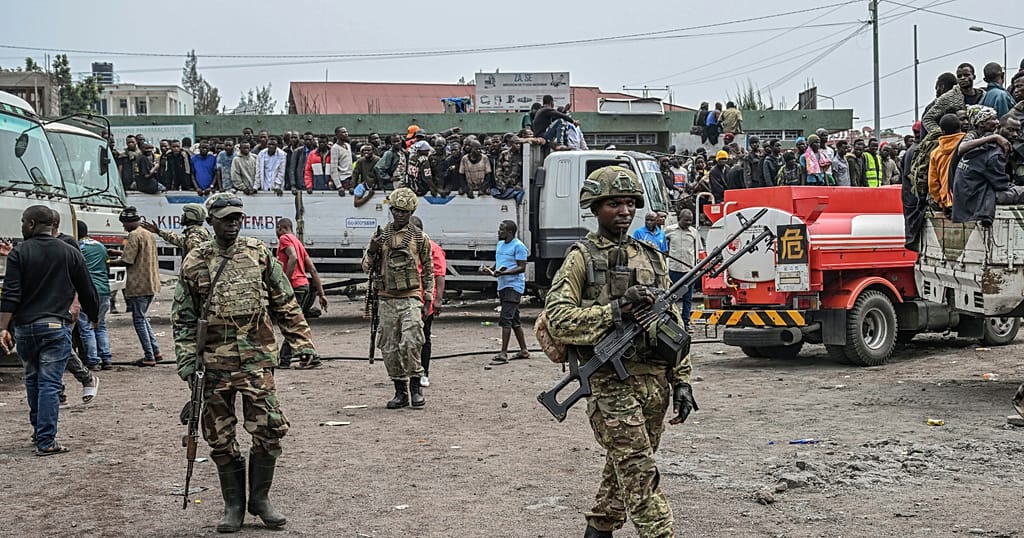
Renewed clashes in eastern Democratic Republic of the Congo have raised concerns that a fragile peace may be slipping away. The latest violence erupted in Uvira on Friday, just days after Rwanda and the DRC reaffirmed their commitment to a U.S.-brokered peace agreement in Washington.
The M23 rebel group, backed by Rwanda, captured the strategic town earlier this month despite not being a party to the accord. The United States has accused Rwanda of violating the agreement, and the M23 announced plans to withdraw from the area. However, residents say many rebels remain in Uvira, either in plainclothes or wearing police uniforms. The DRC government has accused the M23 of regrouping in the hills above the town.
On Friday, Congolese armed forces reportedly used drones to strike rebel boats in Lake Tanganyika’s Kalundu port, according to local security forces. Earlier in the week, residents heard gunfire exchanged between pro‑government forces and M23 fighters. The rebels had previously seized the cities of Goma and Bukavu, located along the border with Burundi, at the start of the year.
The M23 offensive into Uvira on December 10 forced tens of thousands of people to flee across the border into Burundi, overwhelming the country’s capacity to accommodate them, according to the United Nations refugee agency (UNHCR). This situation has heightened concerns about the humanitarian impact of the conflict and the DRC government’s ability to maintain control over its territory.
The ongoing violence has significant regional implications, with the potential to destabilize neighboring countries and exacerbate humanitarian crises. The international community has called for a peaceful resolution, and the U.S.-brokered peace agreement remains a key framework for negotiations. As events unfold, it remains uncertain whether the parties involved can find a path toward lasting peace and stability in the region.


Comments are closed for this story.