
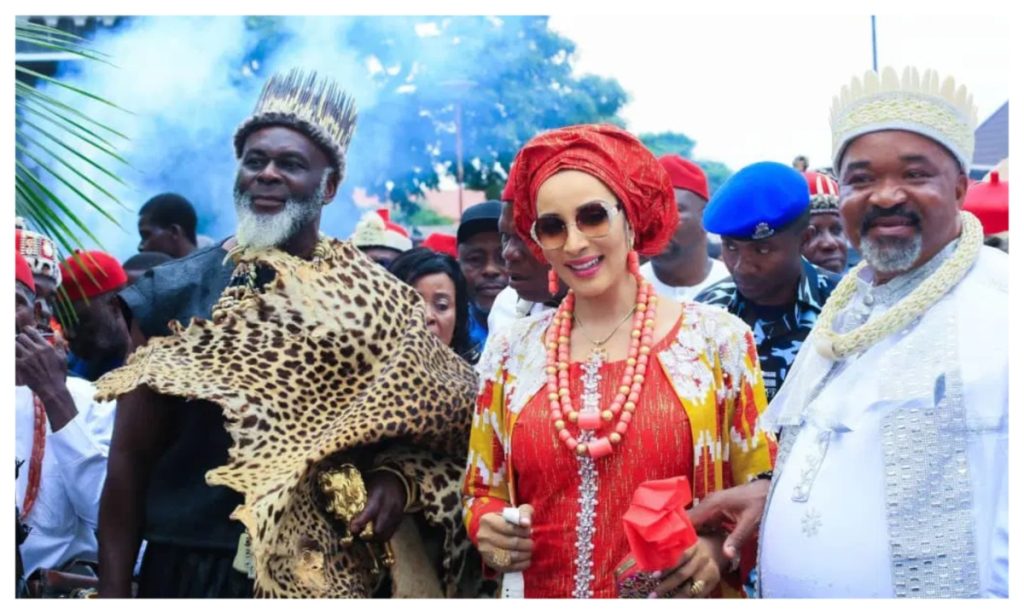
The Anambra State Government has faced criticism from concerned sons and daughters of Awka Ancient Kingdom and supporters of Igbo cultural heritage for dismissing a chieftaincy title conferred on Ambassador Bianca Odumegwu-Ojukwu, the Minister of State for Foreign Affairs. The title, “Anyanwu N’Awalu Ora” (The Light of the Community), was bestowed upon her by His Imperial Majesty, Obi Dr. Austin Chukwuezugo Ndigwe, MON, JP, Ezeuzu III of Awka, in recognition of her contributions to the Igbo community and the nation.
The state government had disclaimed the chieftaincy title, labeling it as ‘fake’ and claiming that the traditional ruler was an ‘impostor.’ However, the Awka community has vehemently rejected this interference, stating that the government’s action undermines the sovereignty of their traditional institutions and represents a blatant overreach into matters that are the exclusive preserve of the Awka people.
According to a statement by Prof. Emmanuel Obi, the traditions, customs, and cultural practices of Awka are not subject to the whims of state bureaucracy or political expediency. The community maintains that the selection, crowning, and affirmation of their leaders are done in accordance with their ancestral laws, and that His Imperial Majesty Obi Dr. Austin Ndigwe was unanimously elected and crowned as Ezeuzu III by the Oha Awka (Council of Elders) and the broader community.
The conferment of the title on Ambassador Bianca Ojukwu is seen as a fitting recognition of her contributions to the community and the wider Nigerian society. As Minister of State for Foreign Affairs, she continues to elevate the profile of Anambra and Igboland on the national and international stage. The Awka community is calling upon Governor Charles Chukwuma Soludo and his administration to immediately retract any statements or actions discrediting the title and to respect the decisions of the Awka people.
The controversy highlights the importance of respecting traditional institutions and the cultural sovereignty of communities. The Awka community is adamant that traditional rulership in Igboland is not a creation of colonial era statutes or modern political appointments, but rather predates the Nigerian state and operates independently of government certificates or ratifications. The government’s role, they argue, should be to support and protect these institutions, not to meddle in them for partisan reasons or to settle scores in ongoing disputes.