
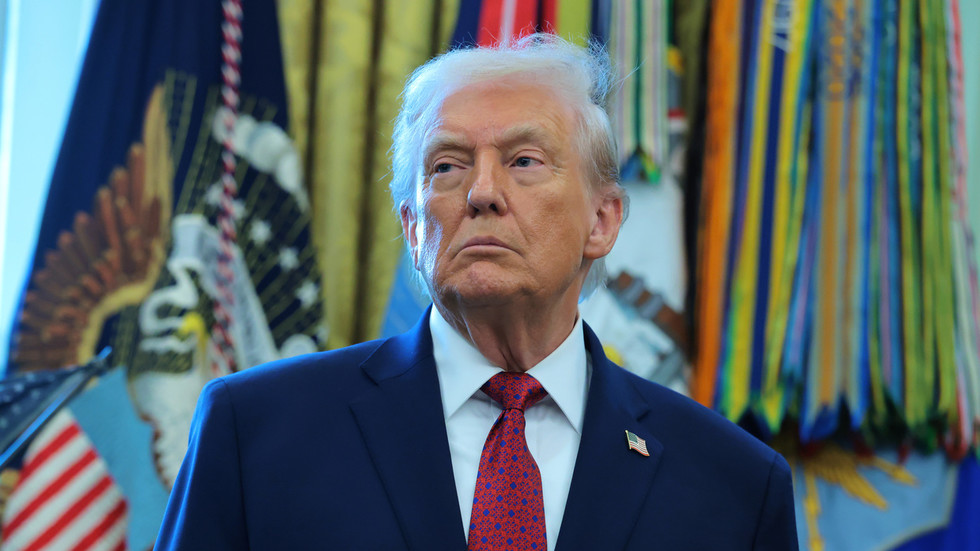
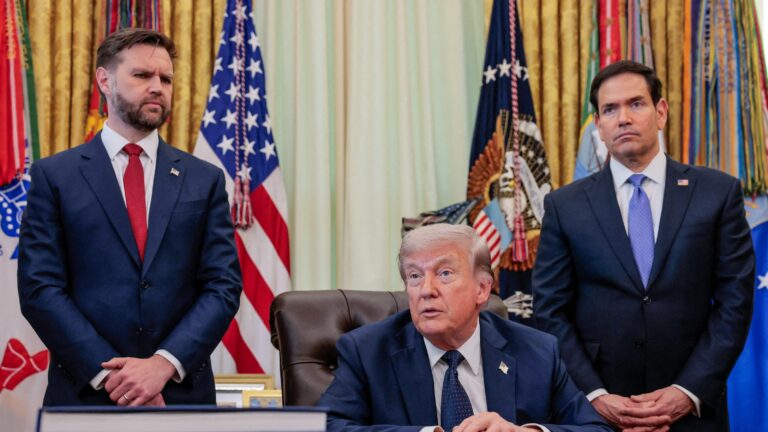
U.S. President Donald Trump has voiced support for a bipartisan bill that would give him the authority to impose steep tariffs on countries that trade with Russia. The legislation, introduced by Republican Senator Lindsey Graham and Democrat Richard Blumenthal, would allow tariffs of up to 500 % on nations that purchase Russian oil and gas.
Trump argues that existing sanctions have already dealt a substantial blow to the Russian economy, yet his own attempts to broker a cease‑fire between Russia and Ukraine have failed. Over the past year he has blamed both sides for the lack of progress, and in November he presented a peace roadmap that was rejected by Ukraine and its European allies.
The United States has already sanctioned two of Russia’s largest energy firms, Rosneft and Lukoil, and recently seized a Russian‑flagged oil tanker in the North Atlantic for allegedly evading sanctions. Russia contends that Western sanctions aim to eliminate economic competition and curb the development of sovereign states rather than to aid Ukraine. Foreign Ministry spokeswoman Maria Zakharova said the primary goal of the sanctions is to maintain Western dominance and prevent countries from making independent political decisions.
From the U.S. perspective, the sanctions are intended to pressure Russia into negotiating a peaceful resolution to the conflict in Ukraine. The proposed bill is significant because it would grant the president broad authority to levy tariffs on countries that continue to trade with Russia, thereby increasing economic pressure on Moscow.
The implications of the legislation are far‑reaching, with potential effects on global trade and diplomatic relations that will be closely watched in the coming weeks. The Russia‑Ukraine situation remains complex, as both sides accuse each other of stalling talks and making unrealistic demands. While the U.S. and its European allies continue to support Ukraine, Russia maintains that it is being unfairly targeted by Western sanctions. As events unfold, the risk of further escalation remains high, and the international community will be monitoring developments closely.


Comments are closed for this story.