
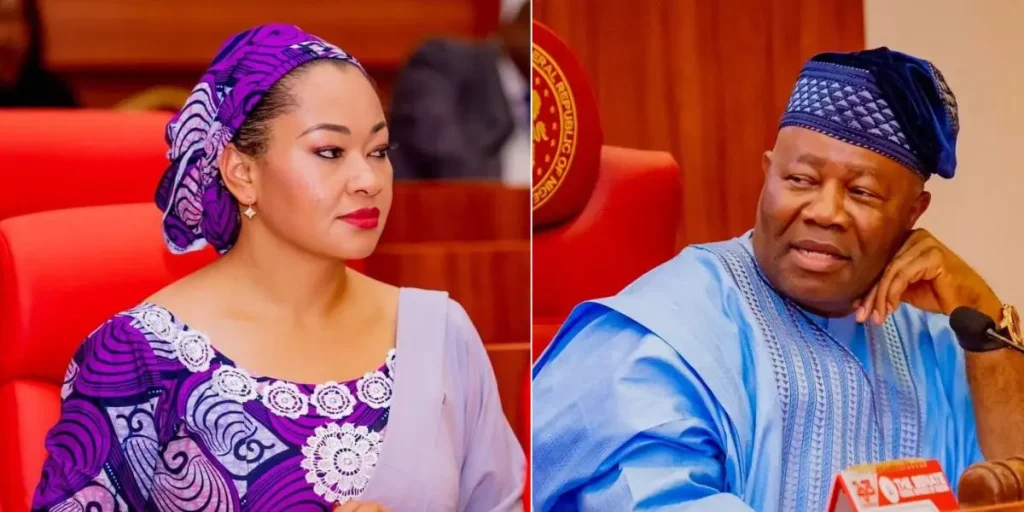
Senate President Godswill Akpabio has withdrawn all defamation suits against individuals, citing faith, leadership responsibility, and a desire for national reconciliation as guiding factors. According to Eseme Eyiboh, Akpabio’s Special Adviser on Media and Publicity, the decision was made after Akpabio attended a New Year Mass at Sacred Heart Parish in Uyo, Akwa Ibom State, where the parish priest emphasized the importance of forgiveness and letting go of past grievances.
The announcement, made on 1 January, affects around nine defamation suits, including the highly publicised N200 billion case against Senator Natasha Akpoti‑Uduaghan. Eyiboh stressed that Akpabio’s choice was not driven by political pressure or expediency but stemmed from deep personal reflection and conviction. The Senate President had consistently defended his reputation through lawful means and had never expressed regret for resorting to the courts when accusations were made against him.
Akpabio’s leadership philosophy, which blends political authority with strong religious values, played a significant role in his decision. Eyiboh explained that forgiveness is not a sign of weakness but an expression of leadership, allowing the Senate President to redirect focus and energy toward more pressing national responsibilities. The withdrawal is also seen as a strategic move to promote reconciliation and unity within the legislature rather than confrontation.
Eyiboh dismissed suggestions that the withdrawal amounted to surrender, emphasizing that restraint requires courage and confidence. Akpabio’s action aims to set a precedent in Nigeria’s political arena, where disagreements often escalate into personal attacks and legal battles. With the country facing insecurity, economic hardship, and social mistrust, leaders must show emotional maturity; such gestures contribute to national healing in ways that policies alone cannot.
By choosing restraint over retaliation, Akpabio seeks to model forgiveness as both a moral obligation and a leadership principle. As Nigeria navigates its current difficulties, the Senate President’s decision may serve as an example for other leaders, highlighting the importance of forgiveness and leadership in promoting national healing and reconciliation.



Comments are closed for this story.