
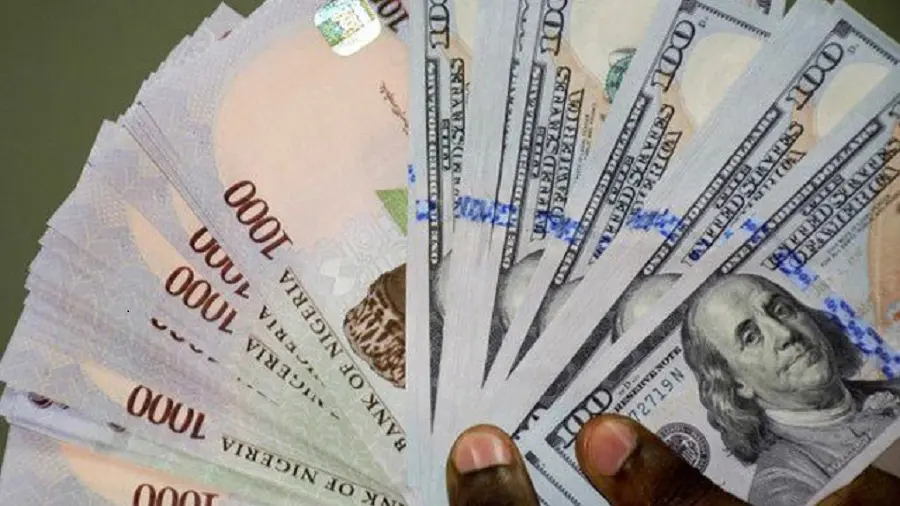
The Nigerian naira recorded its largest depreciation against the US dollar in the official foreign‑exchange market on Friday, extending a week‑long downward trend. Central Bank of Nigeria data show the naira fell to N1,423.17 per dollar, down from N1,419.72 the previous day—a drop of N3.45, the biggest daily decline of the week and the largest so far in 2026. In contrast, the black‑market rate held steady at N1,490 per dollar, unchanged from Thursday.
During the week, the naira experienced three gains and two losses against the US dollar and other major currencies. The currency’s decline comes despite a rise in Nigeria’s external reserves, which reached $45.67 billion as of 8 January 2026. This increase signals greater economic stability and an improved capacity to meet international obligations.
Nigeria’s foreign‑exchange market has been volatile, driven by economic indicators, government policies, and global market trends. The Central Bank of Nigeria continues efforts to stabilize the naira and maintain a steady exchange rate, though challenges remain. Investors, businesses, and individuals closely monitor the naira’s performance because it significantly influences the country’s trade balance, inflation, and overall economic growth.
As the Nigerian economy evolves, the stability of the naira will remain a central focus for policymakers and market observers. Ongoing monitoring and management of the foreign‑exchange market are essential to ensure economic stability and growth, and the naira’s performance will continue to serve as a key indicator of the nation’s progress in the complex landscape of global trade and finance.



Comments are closed for this story.