

NNPCL Chief Credits Dangote Refinery with Easing Nigeria’s Fuel Supply Pressure
The Group Chief Executive Officer of the Nigerian National Petroleum Company Limited (NNPCL), Bayo Ojulari, has stated that the Dangote Refinery provides crucial relief to Nigeria’s oil and gas sector and its downstream fuel supply chain. Speaking at the International Energy Summit 2026 in Abuja, Ojulari highlighted the refinery’s role in mitigating supply disruptions, despite its current output not yet satisfying the nation’s total domestic demand.
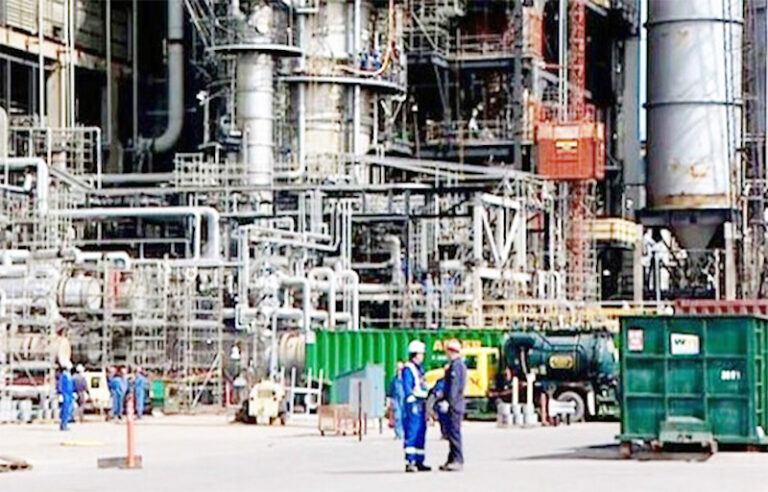
The 650,000-barrel-per-day Dangote Refinery, which began operations last year, represents a significant shift in Nigeria’s energy landscape. For decades, the country relied heavily on imported refined petroleum products. Ojulari emphasized that the NNPCL’s current strategy is explicitly collaborative with the privately-owned facility, moving away from any confrontational posture. “Our strategy is to collaborate with the Dangote Refinery and maximise the value delivered to Nigerians,” he stated.
He acknowledged that while the refinery is not yet meeting full domestic requirements, its operational scale provides a critical “breathing space” and reduces Nigeria’s vulnerability to international supply shocks. Ojulari also noted the NNPCL’s financial stake in the project, stating, “luckily, we are shareholders in that refinery as well.” His comments follow a recent adjustment in fuel prices nationwide, driven by increased ex-depot (wholesale) prices set by the Dangote Refinery and other depot owners. This has pushed petrol pump prices in cities like Abuja to a range of N839 to N905 per litre.
The NNPCL’s framing of the Dangote Refinery as a collaborative partner underscores a pragmatic approach to stabilising the local market. The refinery’s gradual ramp-up is closely watched as a barometer for Nigeria’s energy security. The effectiveness of this public-private cooperation will be central to determining how quickly and sustainably the country can reduce its import dependency and manage fuel price stability for consumers.



Comments are closed for this story.