
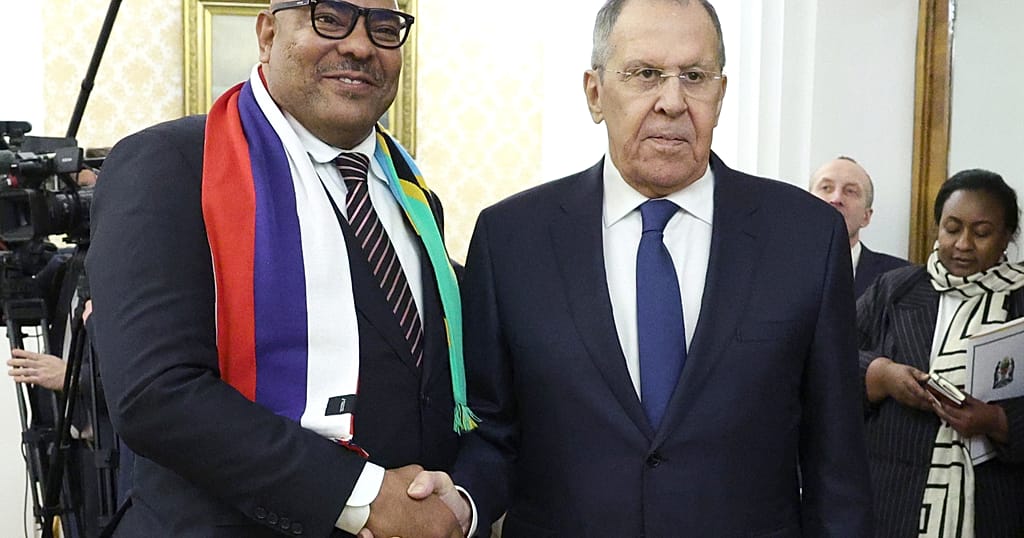
Tanzania and Russia have reaffirmed their commitment to deepening bilateral ties following high-level talks in Moscow. Foreign Minister Mahmoud Thabit Kombo met with his Russian counterpart Sergey Lavrov on Monday, delivering a letter from President Samia Suluhu Hassan to President Vladimir Putin that underscored Dar es Salaam’s dedication to expanding cooperation across multiple sectors.
The discussions highlighted a maturing strategic partnership framed by mutual interest in enhancing diplomatic and economic engagement. Kombo expressed gratitude for Russian efforts to elevate relations, noting that President Hassan had recently emphasised the importance of this partnership in an address to the diplomatic community in Tanzania. Lavrov reciprocated, welcoming the growing collaboration and praising the two nations’ coordinated stance within international forums, including the United Nations.
A key development discussed was the ongoing shift towards bilateral trade in national currencies, an initiative launched in June 2024 designed to reduce dependency on the U.S. dollar and strengthen financial autonomy. This move aligns with broader Russian efforts to expand its economic footprint across Africa, with Tanzania positioned as a significant partner in East Africa.
The ministers also addressed preparations for the third Russia-Africa summit, with talks underway to finalise the timing and venue. This summit is central to Moscow’s strategy of consolidating ties with African states through a structured dialogue mechanism.
Defence, trade, and energy remain focal points of collaboration, reflecting a steady expansion of practical cooperation in recent years. The meeting in Moscow serves as both a confirmation of existing progress and a platform for outlining future trajectories.
The engagement signals Tanzania’s intent to pursue a diversified foreign policy while providing Russia with a reliable ally in a region of strategic interest. Continued high-level dialogue and concrete projects, such as local currency trade, suggest the partnership will advance beyond symbolic gestures toward substantive, long-term alignment.

Comments are closed for this story.