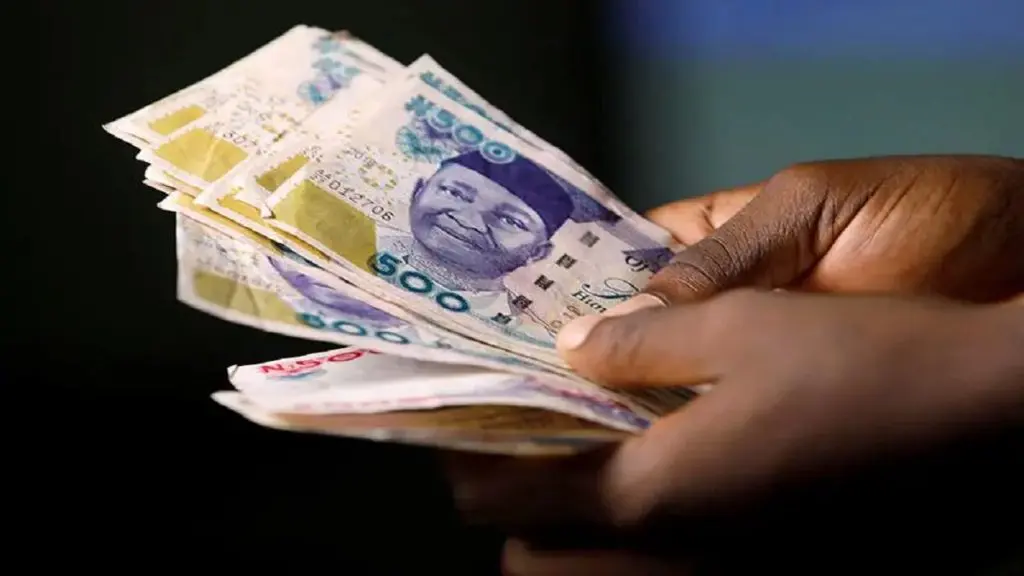
The Naira weakened further against the US dollar in Nigeria’s official foreign exchange market on Tuesday, continuing a recent depreciation trend despite Central Bank of Nigeria (CBN) interventions to boost dollar supply.
According to CBN data, the official exchange rate fell to N1,355.37 per dollar on Tuesday, from N1,349.24 the previous day. This represents a daily depreciation of N6.13. The move follows a similar decline recorded on Monday, as reported by Media Talk Africa, indicating sustained pressure on the local currency in the regulated market.
In contrast, the parallel market rate remained stable at N1,370 per dollar on Tuesday, unchanged from Monday’s level. The persistent gap between the official and black-market rates highlights ongoing discrepancies in Nigeria’s multiple exchange rate system.
The depreciation occurs against the backdrop of renewed CBN efforts to stabilize the forex market. President Bola Ahmed Tinubu confirmed at an event in the presidential villa on Tuesday that the central bank had “mopped up dollars” for the foreign exchange market as part of measures to support the Naira. The statement aligns with the CBN’s stated strategy of increasing dollar availability to curb excessive volatility.
Supporting this intervention, CBN Governor Olayemi Cardoso announced that Nigeria’s gross external reserves have reached a 13-year high of $50.45 billion as of February 16, 2024. The rise in reserves is typically viewed as a positive buffer for currency stability, providing the central bank with ample firepower to defend the Naira in the foreign exchange market.
However, the continued depreciation in the official window suggests that market fundamentals—including demand pressure, confidence issues, and the premium between exchange rate windows—remain significant challenges. While higher reserves offer the CBN greater capacity to intervene, the immediate impact on the Naira’s value has been limited, pointing to deeper structural factors in the forex market.
The situation underscores the complex task facing monetary authorities as they balance reserve management, market liberalization, and exchange rate stability. Market observers will be watching for further CBN actions and the potential evolution of the spread between official and unofficial rates in the coming weeks.