
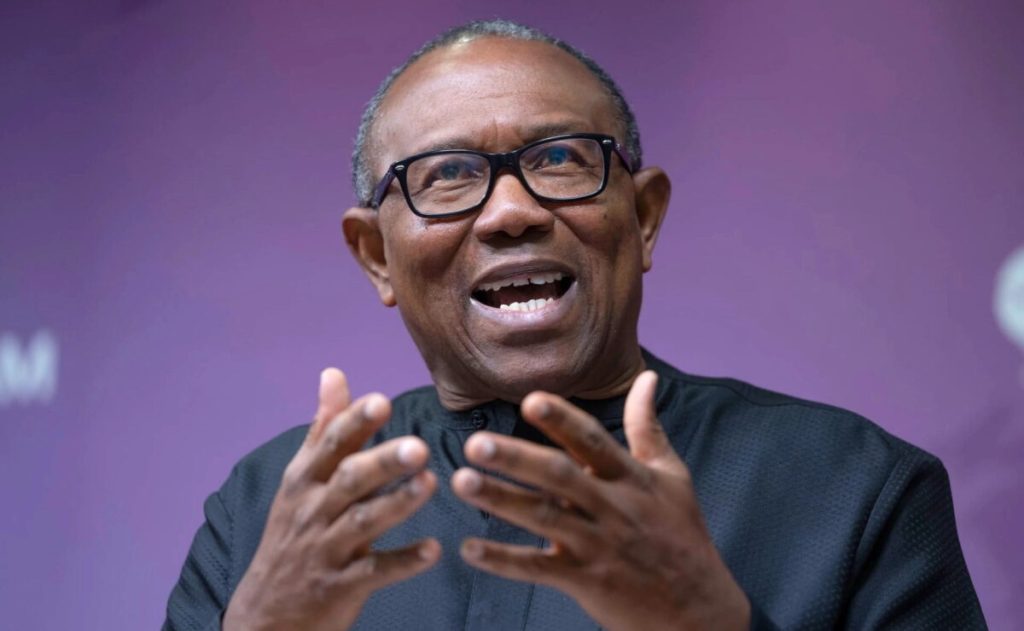
Peter Obi, the Labour Party’s 2023 presidential candidate, has defended his political journey across multiple parties, asserting that his decisions are driven by principles rather than personal ambition. In an interview on Arise TV, Obi outlined his transitions from the All Progressives Grand Alliance (APGA) to the Peoples Democratic Party (PDP), and ultimately to the Labour Party. He attributed these shifts to his refusal to tolerate internal crises and what he termed “transactional politics.” Obi emphasized the need to dismantle the “criminality” that pervades the current political landscape, stating that his engagements are focused on reforming governance and strengthening democratic values.
Obi explained that his departure from APGA was motivated by a desire to prevent internal disputes from destabilizing governance in Anambra State. He noted, “I moved from APGA to the PDP because of issues with my successor. Rather than allow it to become destructive to governance, I moved out.” He further criticized practices within the PDP, describing them as inconsistent with his principles. “People were not playing by the rules. It was transactional. I cannot be part of a transactional system,” he remarked.
Regarding the Labour Party, Obi acknowledged that internal conflicts and legal disputes have contributed to instability within the platform. Despite aligning with figures from various political backgrounds, including those now associated with the African Democratic Congress (ADC), he maintained that the focus should be on current commitments rather than past affiliations. “What is important is not what people were yesterday, but what they are today,” he stated.
Obi recognized public skepticism but insisted that ongoing political realignments are part of a broader effort to rebuild a credible opposition capable of delivering accountable leadership. “We are ready to work with people who are committed to change. If the process is compromised again, we will continue the fight,” he added. His remarks come amid heightened political activity and shifting alliances as opposition figures seek to consolidate their forces and present a unified front against entrenched political structures ahead of future elections.
Comments are closed for this story.