
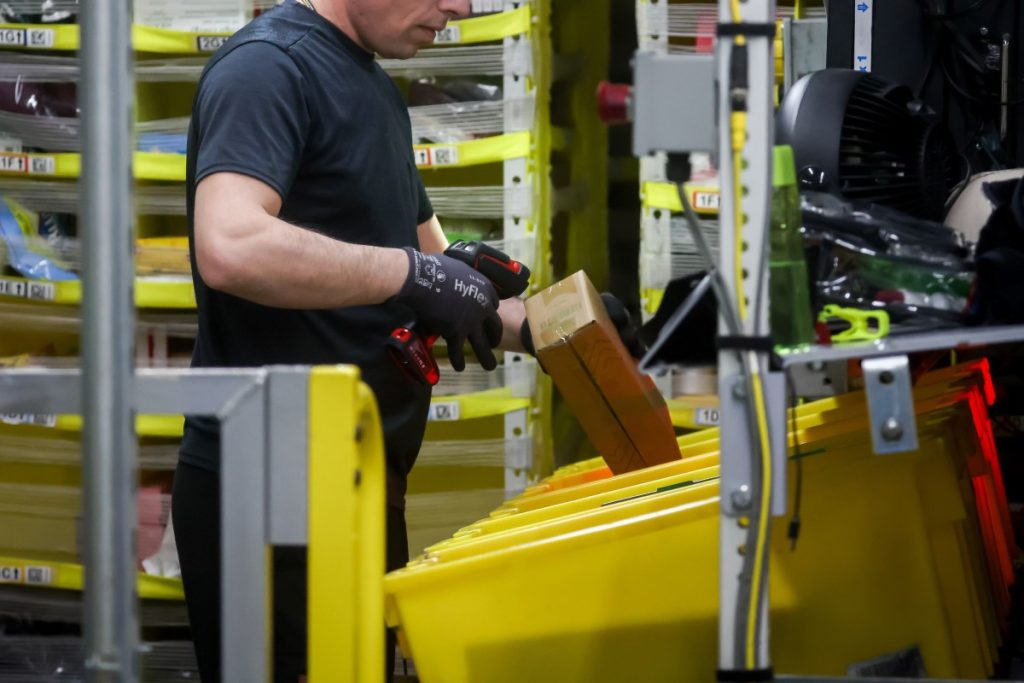
An Amazon employee at the Troutdale, Oregon, warehouse died at work last week, as confirmed by the company. According to the Western Edge, an independent investigative outlet covering the Pacific Northwest, the worker collapsed on the floor at the PDX9 facility and remained there while colleagues continued working nearby. Amazon spokesperson Sam Stephenson expressed that the company is “deeply saddened” by the loss and has extended condolences to the employee’s family. In response to the incident, grief counselors were made available on-site, and both the Multnomah County Sheriff’s Department and local emergency medical services responded.
Several workers posting on a Reddit forum for Amazon fulfillment center staff reported that the building had been unusually hot after soundproof curtains were installed, which restricted airflow. They suggested that the heat may have contributed to the employee’s death, exacerbating the physical demands of warehouse duties. The Western Edge noted that some employees observed the building was cooler when they returned the following day. Amazon stated that Oregon’s Occupational Safety and Health Administration (OSHA) determined the incident to be non-work related. Employees who were sent home early were compensated for the remainder of their shift, and the night shift was canceled with workers also receiving compensation.
The PDX9 warehouse has a history of harsh working conditions. A 2018 investigation by Reveal found that 26% of its employees had sustained injuries. More recent OSHA data for 2024 indicated that Amazon fulfillment centers reported serious injuries at more than twice the industry average for warehouses. Federal agencies and prosecutors have initiated multiple investigations into Amazon warehouse safety, alleging data manipulation and under-reporting of workplace injuries. The United States Attorney’s Office for the Southern District of New York is currently conducting an ongoing investigation. In response to these concerns, Amazon informed TechCrunch that it has reduced its global recordable incident rate by 43% since 2019—a measure of work-related injuries requiring more than basic first aid—and has invested over $2.5 billion in safety improvements since that year, including hundreds of millions in 2025 alone.



Comments are closed for this story.