
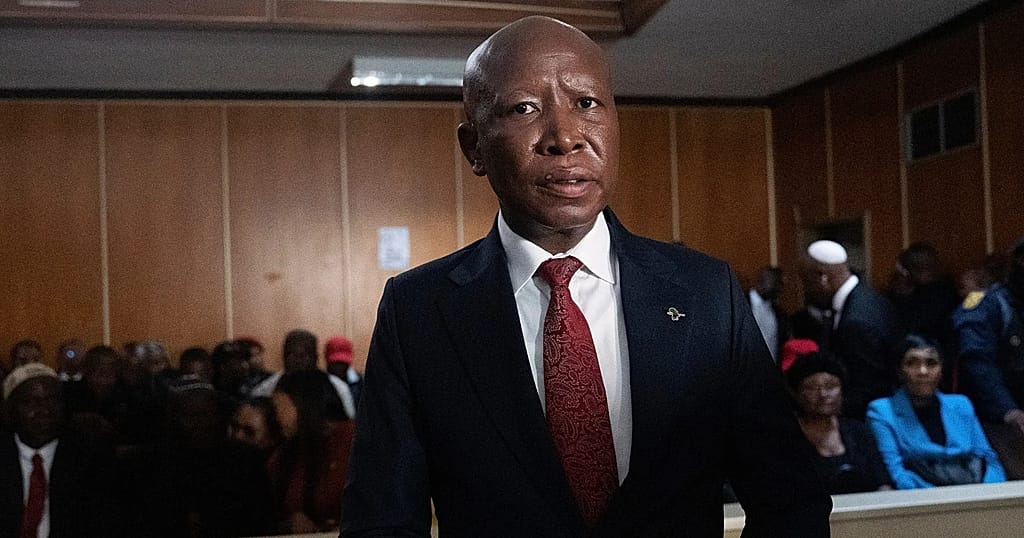
JOHANNESBURG — Julius Malema, a prominent South African opposition politician and leader of the radical left-wing Economic Freedom Fighters (EFF), has been sentenced to five years in prison for the unlawful possession of an assault rifle and for firing it into the air during a rally in 2018. The sentence was issued by Magistrate Twanet Olivier in KuGumpo, previously known as East London. Malema has been granted leave to appeal the conviction and has been released pending the outcome of that appeal process.
Malema was convicted in October following a case initiated by the conservative lobby group AfriForum. The court dismissed his attempt to appeal the conviction, ruling that he had violated South Africa’s firearms laws. While Malema’s defense argued that the shots fired were celebratory, the court rejected this assertion. The case has attracted considerable political attention, with hundreds of Malema’s supporters gathering outside the courthouse, donning the EFF’s signature red berets and singing campaign songs.
Following his release, Malema accused the magistrate of racism and claimed that her judgment was influenced by an “invisible hand,” although he provided no evidence to support this allegation. The EFF, which garnered less than 10 percent of the vote and holds 39 parliamentary seats in the upcoming 2024 general election, has characterized the prosecution as an attempt to silence Malema, who is known for his fiery rhetoric and criticism of government policies. Supporters of the party have threatened to protest if he is imprisoned.
AfriForum, which has a longstanding adversarial relationship with Malema, previously challenged him over his use of the anti-apartheid chant “Kill the Boer,” a phrase referring to white Afrikaners. The group contends that the chant constitutes hate speech and incites violence; however, South African courts have consistently rejected these claims. According to South Africa’s constitution, a prison sentence of 12 months or more, if upheld after all appeals, would disqualify Malema from serving as a member of parliament. The magistrate emphasized that the conviction was directed at Malema as an individual and not at the political party itself. The date for the appeal hearing has yet to be determined, and the case continues to polarize public opinion in a nation already facing significant political divisions.




Comments are closed for this story.