
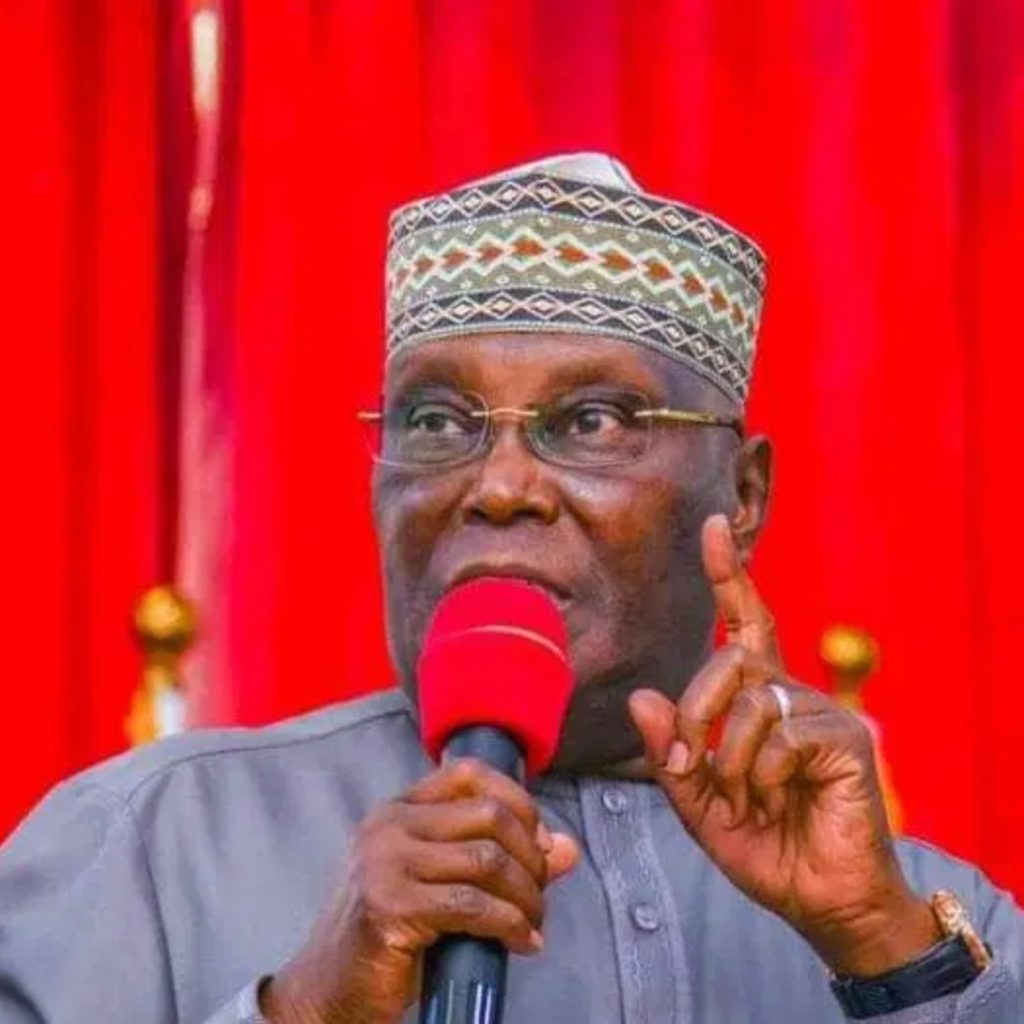
Former Vice President and chieftain of the African Democratic Congress (ADC), Atiku Abubakar, has criticized the recent Code of Conduct advisory issued by the National Broadcasting Commission (NBC). He described the advisory as an attempt to restrict press freedom and limit free expression in Nigeria. In a statement released via his official X handle on Saturday, Atiku expressed his concerns, stating, “The Code of Conduct advisory issued by the National Broadcasting Commission is yet another troubling attempt to muzzle the media and shrink the space for free expression in Nigeria.”
Atiku emphasized the significance of the media industry, noting that it has evolved into a formidable institution respected globally for its resilience and professionalism. He expressed alarm at the NBC’s pattern of issuing heavy-handed directives as elections approach, which he believes do more to silence dissent than to uphold ethical journalism. “I stand firmly with Nigeria’s broadcast industry and all media platforms resisting this creeping censorship,” he asserted.
He further clarified that ethical standards should not be treated as seasonal tools to be weaponized during campaigns, but rather as constant obligations. The timing and tone of these regulations, according to Atiku, reveal a deeper agenda, indicating a government more focused on controlling narratives than on ensuring a free, fair, and transparent electoral process.
The NBC’s advisory states that broadcasters are expected to maintain neutrality and uphold ethical standards at all times. It warns that any anchor or presenter found expressing personal opinions as fact, bullying or intimidating guests, denying opposing views a fair hearing, compromising neutrality, or showing disrespect for human dignity would be deemed in violation of broadcast regulations. This advisory has drawn sharp criticism from media stakeholders and opposition figures, who argue that it could be used to suppress dissenting voices ahead of significant political events. Atiku’s remarks contribute to the growing concerns over press freedom in Nigeria, where regulatory bodies have increasingly been accused of targeting critical media coverage.



Comments are closed for this story.