
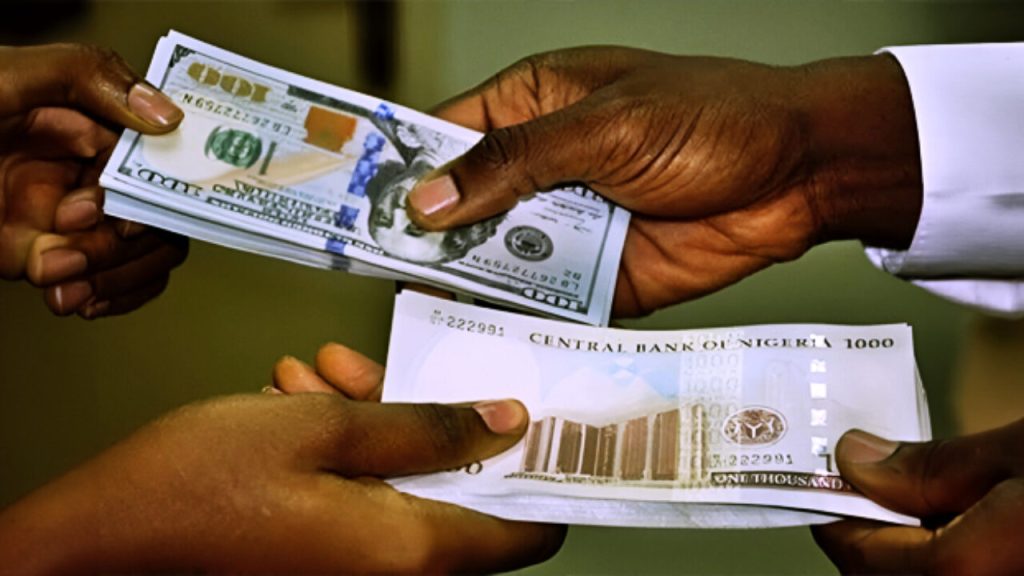
The Nigerian naira continued its downward trajectory against the United States dollar on Monday, weakening in both the official and parallel foreign‑exchange markets. Data from the Central Bank of Nigeria show the official rate fell to N1,349.67 per dollar, down from N1,343.64 on Friday—a decline of N6.03 in a single trading session. In the parallel market, where Bureau de Change operators trade, the drop was steeper: operators in Abuja’s Wuse Zone 4 reported the rate slipping to N1,430 per dollar, compared with N1,410 on Friday, a depreciation of N20 in one day.
This weakening occurs against a backdrop of declining external reserves. As of 17 April 2026, Nigeria’s foreign reserves stood at $48.62 billion, lower than previous levels. The persistent pressure on the naira reflects ongoing challenges in the country’s forex market, including limited dollar liquidity and sustained demand pressures. The widening gap between official and parallel market rates underscores the volatility of Nigeria’s foreign‑exchange environment.
Market analysts note that the divergence between the two markets continues to pose challenges for economic planning and foreign‑investment flows. Although the Central Bank of Nigeria has maintained various interventions to stabilize the forex market, the currency’s performance suggests that structural pressures remain unresolved. As Nigeria navigates these forex challenges, stakeholders across sectors are closely monitoring developments, given the broad implications of the naira’s depreciation for inflation, import costs, and overall economic stability.



Comments are closed for this story.