
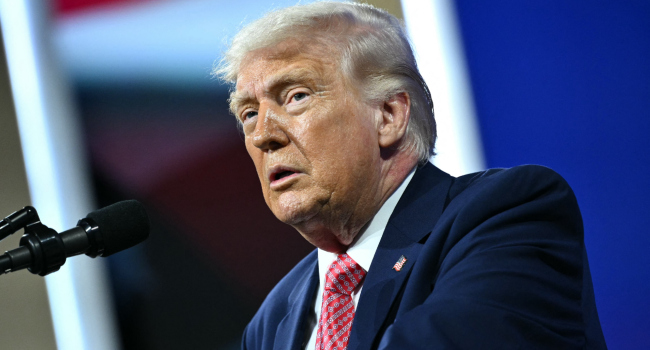
Oil prices fell on Wednesday as investors remained cautious about the prospects for US‑Iran peace talks. President Donald Trump made a last‑minute decision to extend a two‑week ceasefire while keeping the Strait of Hormuz blockaded. With the truce set to expire, Trump announced he would delay the deadline indefinitely after a request from Pakistan, giving Tehran more time to present a formal proposal. “I have directed our military to continue the blockade and, in all other respects, remain ready and able,” he posted on social media, citing the need for Iran’s “fractured” leadership to formulate a response. The choice to avoid immediate military action but keep the waterway closed left markets awaiting further clarity.
White House officials said Vice President JD Vance would not travel to Islamabad for scheduled talks until Iran’s proposal is received. Tehran has said it will not attend, calling US demands unreasonable, and Iranian state media suggested no prospect of negotiations in the near term. Christopher Wong, a strategist at Oversea‑Chinese Banking Corp, observed that both sides seemed to be “playing a game of who blinks first,” adding that the ongoing uncertainty could curb risk appetite, though markets might rally once a breakthrough occurs. Both main oil contracts fell after rising nearly 3 % the previous day.
Equity markets were mixed. Hong Kong, Sydney, Singapore, Manila, Mumbai and Jakarta declined, while Tokyo, Shanghai, Seoul, Taipei and Wellington gained. London opened higher despite UK inflation jumping to 3.3 % in March, driven by rising energy prices linked to the Middle East conflict. Paris and Frankfurt also advanced. Traders have struggled for direction this week after Iran initially signaled it would reopen the Strait of Hormuz—closed since the conflict began on February 28—but then reversed course due to the US blockade and the seizure of a vessel. Trump has accused Tehran of violating the ceasefire by harassing ships in the critical waterway, through which roughly one‑fifth of global oil transits.
Fawad Razaqzada, an analyst at FOREX.com, warned that failure to reach a deal could push oil prices back above $100 a barrel, likely pressuring equities. Markets are also watching the confirmation hearing for Kevin Warsh, Trump’s nominee to replace Federal Reserve Chair Jerome Powell. Warsh pledged to preserve the central bank’s independence, insisting he would not be a “puppet” of the president, who has criticized Powell for not cutting rates more aggressively.
At 0715 GMT, West Texas Intermediate crude was down 1.1 % at $88.73 a barrel, while Brent North Sea crude fell 0.8 % to $97.71. The Nikkei 225 rose 0.4 % in Tokyo, and the Hang Seng Index dropped 1.2 % in Hong Kong. The euro strengthened slightly against the dollar, the pound edged higher, and the dollar weakened against the yen.


Comments are closed for this story.