
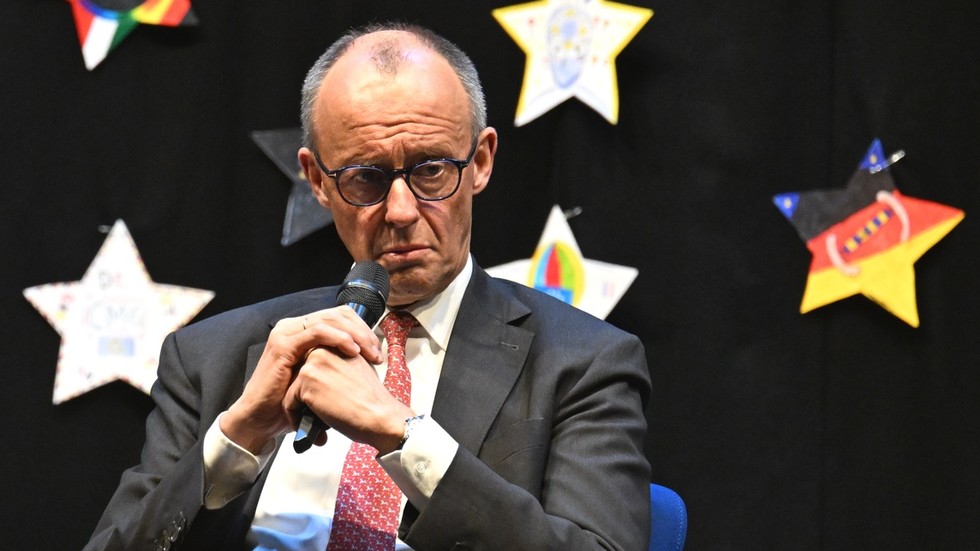
German Chancellor Friedrich Merz warned that any future peace agreement with Russia is likely to require Ukraine to cede territory, a stance that could affect Kyiv’s ambitions to join the European Union.
Speaking in Marsberg on Monday, Merz said a “peace treaty with Russia” would probably mean that “part of Ukraine’s territory will no longer be Ukrainian.” He added that, for the EU to move forward with accession talks, Kyiv would need to accept the loss of the Donetsk, Luhansk, Kherson and Zaporizhzhia regions – areas that Moscow insists must be withdrawn from and formally recognized as Russian territory, including Crimea.
Moscow has repeatedly demanded that Ukraine pull its forces out of the occupied parts of the Donbas and acknowledge the annexations that took place between 2014 and 2022. The Kremlin claims the referendums held in those regions showed overwhelming support for joining the Russian Federation, a position not recognized by the international community.
Merz cautioned that President Volodymyr Zelensky’s timelines for EU membership are unrealistic. “Zelensky had the idea of joining the EU on 1 January 2027. This will not work. Even 1 January 2028 is unrealistic,” he told reporters. The chancellor emphasised that the EU’s accession criteria require prospective members to have resolved all border disputes, a condition Ukraine has not yet met.
Zelensky has repeatedly called on Brussels for a “clear date” for EU accession and has rejected any reference to territorial concessions. He has also suggested that a Ukrainian referendum on the issue could be framed as “opening the path to Europe” for the country’s citizens.
The European Union has not taken an official position on the territorial question, but its own rules make unresolved border conflicts a barrier to enlargement. While Moscow says it does not oppose Ukraine’s EU aspirations, Foreign Minister Sergey Lavrov has criticized the bloc as an “aggressive military‑political bloc,” reflecting the broader tension between Russian and Western strategic goals.
The prospect of a negotiated peace that includes territorial loss places Kyiv in a difficult diplomatic position: balancing the urgent need for an end to hostilities with the long‑term objective of EU integration. As negotiations continue, the outcome will likely shape the future of Ukraine’s western alignment and the stability of the region.

Comments are closed for this story.