
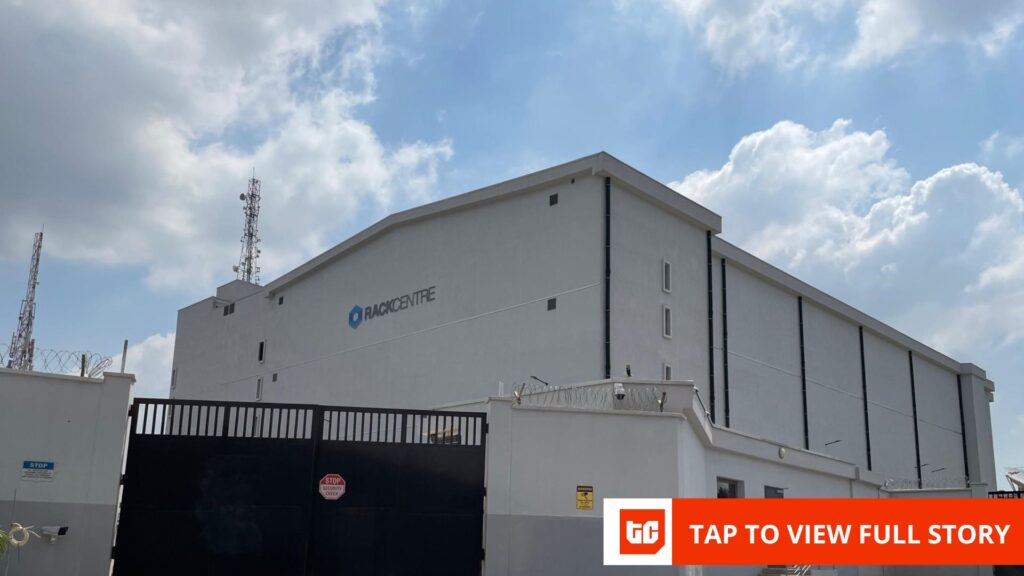
Lagos‑based Tier III carrier Rack Centre has announced a structured training programme for university students and recent engineering graduates, set to commence on Wednesday. The initiative aims to widen Nigeria’s data‑centre talent pool as demand for data‑infrastructure, cloud services and AI workloads accelerates across Africa.
The programme will admit 15‑20 participants in its first cohort. Trainees will follow two certification tracks, one of which is delivered with Schneider Electric’s training platform. After completing the coursework, each participant will undertake an advanced module and a one‑month internship on a live facility. The full curriculum spans four to five months and costs approximately $2,500 per trainee – a fee fully subsidised by Rack Centre.
According to Adebola Adefarati, head of marketing and communications at Rack Centre, the effort responds to a chronic shortage of specialised engineers. “There’s a lot of recycling of the same people across companies. The industry has to start creating new talent,” he told TechCabal. A survey by the Africa Data Centre Association (ADCA) found that 67 % of Nigerian data‑centre operators cite talent retention as a major challenge, while more than 60 % rely on informal, in‑house training to keep operations running.
The shortage is evident despite a rapid expansion of data‑centre capacity on the continent. As of February 2026, Africa hosts 249 operational data‑centres, yet the supply of engineers capable of managing power, cooling and real‑time fault detection has not kept pace. Uptime Institute projects a global shortfall of 2.5 million data‑centre professionals by 2025, highlighting the scale of the gap.
Rack Centre’s 13.5 MW site currently employs about 65 full‑time staff, including technicians, engineers and management, reflecting the highly specialised yet relatively small teams required for modern facilities. For larger 100 MW sites, staffing typically ranges from 30 to over 100 personnel. Because the workforce is limited, the company cannot absorb all trainees internally; instead, it expects graduates to be distributed across the broader ecosystem of data‑centre operators and telecom providers.
The training model aligns with ADCA’s broader “source‑train‑place” strategy, which targets the development of up to 1,000 data‑centre professionals over the next two years. Rack Centre also seeks to address gender imbalances in the sector, aiming for at least one‑third of each cohort to be female, in contrast to the roughly 5 % representation of women in technical roles at many facilities.
Adefarati emphasised that the challenge is not a lack of engineering graduates but the need for expertise in environments that must operate continuously. “Data centres are different. You’re dealing with redundant power, precision cooling and real‑time fault detection in a highly sensitive environment,” he said.
By investing in a dedicated training pipeline, Rack Centre hopes to strengthen Nigeria’s capacity to maintain high‑availability infrastructure under local conditions, such as ambient temperatures exceeding 40 °C and an unreliable grid. The programme’s launch marks a coordinated effort to build sustainable talent for Africa’s growing data‑centre market.




Comments are closed for this story.