
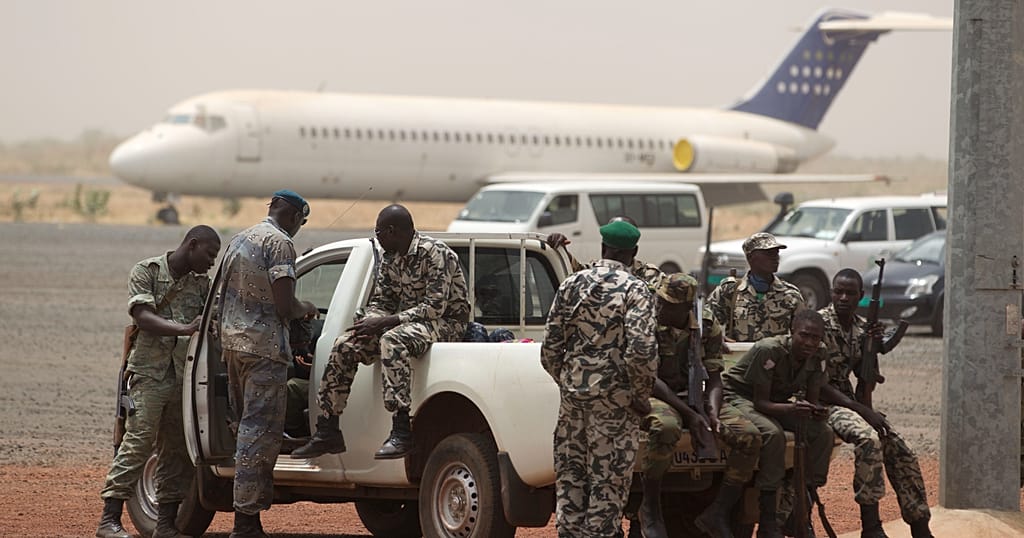
Mali’s air travel has been halted after a wave of violence forced Sky Mali to suspend flights to the country’s northern and central regions, raising renewed security concerns in the West African state.
The airline’s decision follows a series of coordinated attacks carried out on 27 April that targeted key military installations and infrastructure in Bamako and other locations. Explosions and gunfire were reported in the capital, where several government buildings and a military barracks were hit. The attacks, which have been claimed by both jihadist and rebel groups, demonstrate an increased capability to strike multiple sites simultaneously and expose gaps in Mali’s security framework.
In response to the escalating threat, Sky Mali announced the immediate suspension of all scheduled services to Bamako‑Sénou International Airport for routes heading north and toward the central provinces. The airline cited concerns for passenger safety and the inability to guarantee secure ground operations. The suspension leaves dozens of travelers stranded and may further isolate the junta‑led country, which has already faced restrictions on international assistance and travel.
Neighboring states have reacted by warning their citizens and commercial operators to avoid entry points and overland routes that traverse Mali. Officials from Burkina Faso, Côte d’Ivoire and Senegal have issued travel advisories, urging businesses and NGOs to suspend movements into the affected areas until the security situation stabilises.
The broader fallout of the attacks underscores the fragility of Mali’s security environment, which has been under pressure since the military coup in May 2021 and the subsequent withdrawal of international peacekeeping forces. The United Nations has expressed deep concern over the recent violence, calling for coordinated regional assistance to address the deteriorating security landscape.
Airline operators in the region are monitoring the situation closely, with some considering temporary route adjustments or additional security measures for flights that continue to operate within Mali’s borders. The International Civil Aviation Organization (ICAO) is expected to review the incident and may issue guidance on risk‑assessment protocols for airlines serving volatile destinations.
The suspension of air services adds to the humanitarian and economic challenges facing Mali, where travel disruptions complicate the delivery of aid and impede trade. Stakeholders, including the Malian authorities, regional bodies and international partners, are likely to convene in the coming days to discuss possible measures to restore safe air connectivity and to address the underlying security threats.
The developments highlight the immediate need for a coordinated response to curb the spread of instability and to safeguard both civilian and commercial movement across the Sahel region.




Comments are closed for this story.