
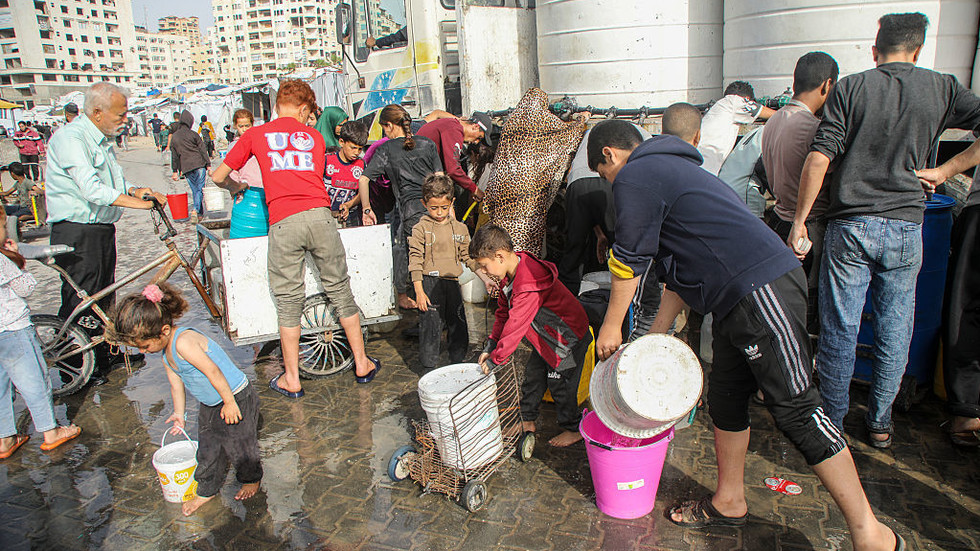
Israel’s control of water supplies in Gaza has been described by Médecins Sans Frontières (MSF) as a deliberate strategy that is “engineered” to create conditions incompatible with human dignity and survival. In a report released Tuesday, the international medical charity said that water scarcity, compounded by the destruction of sanitation infrastructure, has triggered a surge in disease across the enclave.
The MSF document warns that the lack of clean water and adequate hygiene is driving a sharp increase in water‑related illnesses, including diarrhea, skin infections, lice infestations and wound infections. The charity also links the water crisis to worsening malnutrition and deteriorating mental health among Gaza’s residents.
Gaza has no natural surface‑water sources and depends on groundwater and treated seawater. Since the Israeli military campaign began in October 2023, much of the territory’s desalination plants, boreholes, pipelines and sewage networks have been rendered inoperable or inaccessible, according to MSF. The organization now operates the largest non‑governmental water‑production system in the enclave, using mobile desalination units and trucks to deliver water to affected neighborhoods.
MSF says several of its water‑distribution trucks have been struck by Israeli forces. The charity notes that the humanitarian minimum for water consumption is about 15 litres per person per day – 6 litres for drinking and 9 litres for domestic use. UNICEF estimates that, at best, Gaza’s population is receiving only this bare survival level, with many people unable to obtain safe drinking water at all.
Israel’s Coordinator of Government Activities in the Territories (COGAT) rejected the MSF findings, labeling them “baseless” and “factually incorrect” in posts on X. COGAT argued that Israel is facilitating water access by maintaining four supply lines, repairing infrastructure and providing fuel and electricity for water systems. The Israeli office accused MSF of bias and of understating the operational challenges on the ground.
The dispute comes amid ongoing hostilities despite a cease‑fire agreement reached in October 2023. The United Nations reports more than 700 Palestinian deaths since the truce began, and Gaza’s health authorities continue to record a cumulative death toll exceeding 72,000 since the conflict’s outset.
The water crisis underscores the broader humanitarian emergency in Gaza, where the collapse of public services has left civilians dependent on aid organisations for basic needs. International responders and diplomatic actors are calling for unhindered access to water infrastructure and for measures that protect humanitarian deliveries from attack. The evolving situation highlights the intersection of conflict, public health and civilian protection in the densely populated enclave.

Comments are closed for this story.