
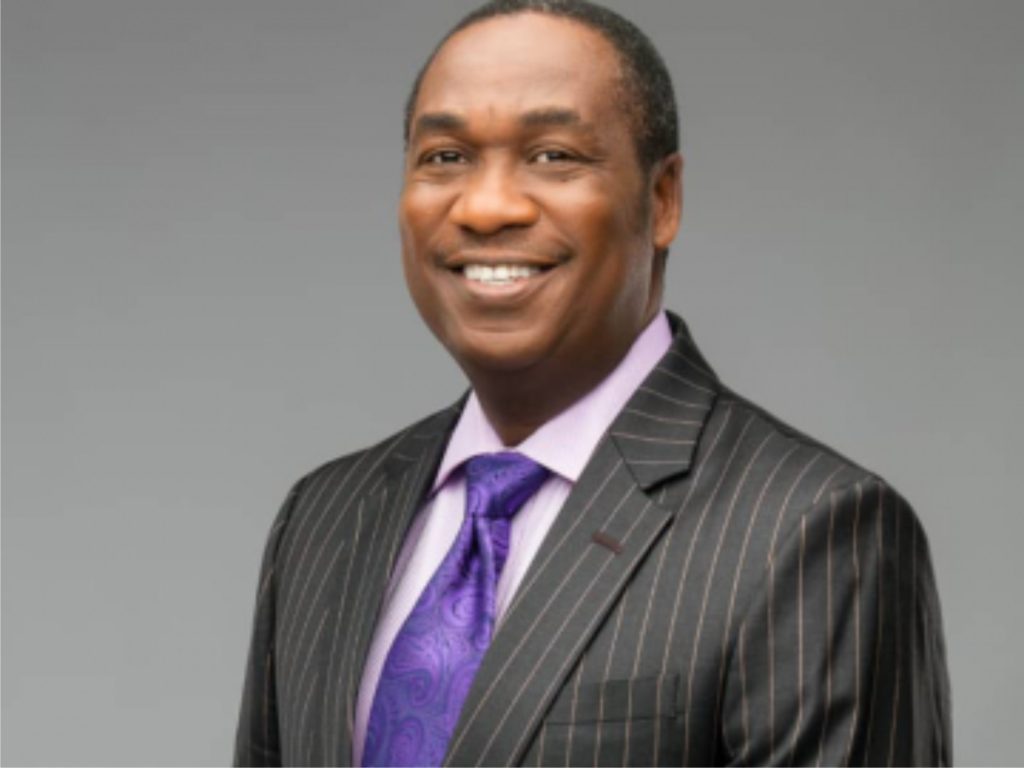
Lagos governorship hopeful Dr Samuel Mawuyon Ajose has formally denied a press release that claimed he endorsed Deputy Governor Obafemi Hamzat as the All Progressives Congress (APC) consensus candidate for the 2027 Lagos State election.
In a written disclaimer released to the media, Ajose described the circulating document as “false, unauthorised and misleading.” He asserted that he had neither authored nor approved any statement supporting Hamzat’s alleged endorsement by the party’s Governance Advisory Council (GAC).
“My attention has been drawn to the circulation of a false and unauthorised press release in the Nigerian media, purporting to convey my endorsement of Dr Hamzat as the Lagos State governorship candidate of our party, and my support for the decisions of the state’s GAC, a process in which I played no part,” Ajose wrote. He added that the material was a “deliberate attempt to misrepresent my position.”
The aspirant emphasized that the alleged endorsement “does not reflect my position, my campaign’s stance, or that of any individual authorised to speak on my behalf.” He urged the public, especially his supporters and Lagos residents, to disregard the content, warning that it was designed to distort public perception and influence political narratives.
Ajose also addressed media outlets that have reproduced the statement. He demanded that any platform that has disseminated the document issue an immediate retraction and remove the material within 12 hours. Failure to comply, he warned, would result in legal action, including defamation claims and measures to address electoral damage.
“This is a defamatory and potentially criminal instrument intended to damage my reputation, and I will take all necessary legal steps to address it,” Ajose said.
The controversy emerges as the APC begins internal processes to select its candidate for the 2027 Lagos governorship race. Hamzat, currently serving as deputy governor, has been widely discussed as a possible consensus choice, though the party has not formally announced a candidate. Ajose, a former health commissioner and prominent party member, entered the race earlier this year and has campaigned on reforms in health and education.
The incident highlights the heightened sensitivity around media reporting and political communications in Nigeria’s pre‑election environment. As parties finalize their slates, verification of statements and source authenticity are likely to become increasingly scrutinised.
Ajose’s legal warning sets a clear expectation for media compliance and underscores the broader challenge of misinformation in Nigeria’s electoral landscape. The upcoming weeks will reveal whether the disputed press release will be retracted and how the APC’s candidate selection will progress.


Comments are closed for this story.