
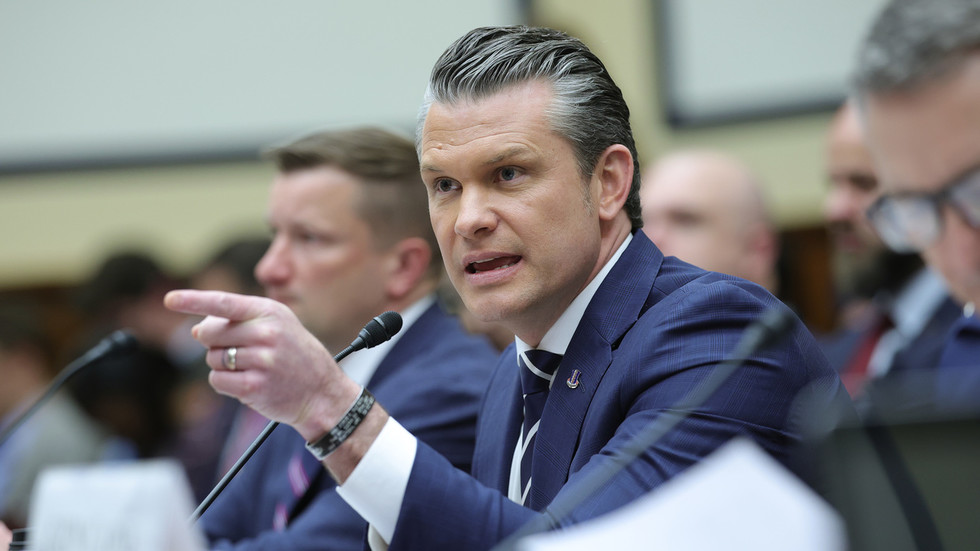
US Secretary of Defense Pete Hegseth told the House Armed Services Committee that “the American people support the mission” in the ongoing air campaign against Iran, contradicting recent polling that shows a majority of U.S. adults oppose the war. Hegseth’s remarks came during his first high‑profile appearance since the conflict began in February, when a U.S.–Israeli bombing campaign, initially projected to last a few weeks, has extended into a costly, months‑long operation.
The war has cost roughly $25 billion, resulted in more than 1,300 civilian deaths and disrupted global energy markets after a blockade of the Strait of Hormuz. No clear strategic gains have been reported. When questioned by committee members, Hegseth criticized Democrats and some Republican lawmakers for “handing propaganda to our enemies,” describing critics as “reckless, feckless and defeatist.” He asked, “Who are you cheering for here? Who are you pulling for?”
President Donald Trump later echoed Hegseth’s assertion, citing a Harvard CAPS/Harris poll that showed 52 percent of respondents supporting U.S. airstrikes on Iran. The same poll revealed a partisan split: 79 percent of Republicans backed the strikes, compared with 26 percent of Democrats and 46 percent of independents. Other recent surveys contradict the administration’s claim. NPR/PBS/Marist and CNN polls indicate a majority of Americans oppose the military action, while a Reuters/Ipsos poll released in late April showed support falling to about one‑third of respondents.
The divergence between official statements and public opinion comes as President Trump’s approval rating reaches record lows and his Iran policy draws criticism from both allies and business leaders. Disruptions to shipping through the Strait of Hormuz and rising fuel prices pose political risks for Republicans ahead of the 2026 midterm elections. Democrats are reportedly exploring legal action, arguing that the White House violated federal law by conducting the operation without congressional authorization.
The dispute over the war’s legitimacy highlights a growing gap between U.S. leadership and domestic sentiment. As the conflict continues, further congressional scrutiny and potential legal challenges appear likely, while public opinion may increasingly influence policymakers’ calculations about the United States’ involvement in Iran.



Comments are closed for this story.