
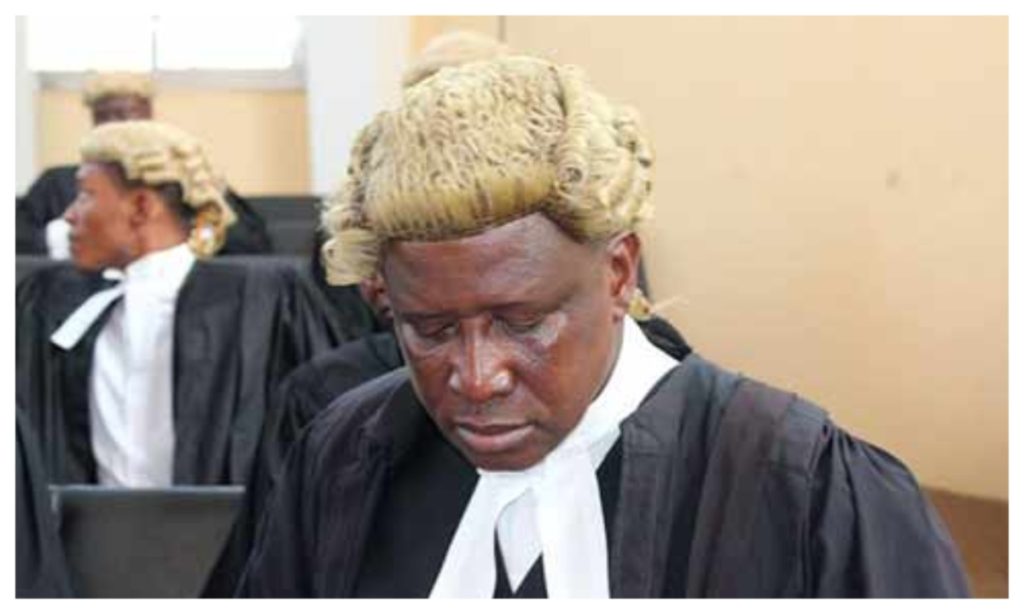
A senior Nigerian lawyer, Oba Maduabuchi, cautioned against celebrating the Supreme Court’s recent ruling on the African Democratic Congress (ADC). Speaking on Arise Television’s “Morning Show,” Maduabuchi asserted that the decision does not resolve the dispute over the party’s leadership.
The Supreme Court’s judgment, delivered on 30 April, overturned a Court of Appeal order that had barred the recognition of former Senate President David Mark as ADC National Chairman. According to Media Talk Africa, the apex court, in a unanimous decision, held that the Court of Appeal should not have issued its order because none of the parties in the case had sought such a remedy. Justice Mohammed Lawal Garba stated that the appeal was not properly before the appellate court.
Maduabuchi argued that the ADC “had no business at the Supreme Court” because there was no appealable decision from the Federal High Court. He said the Court of Appeal exceeded its jurisdiction by issuing an order that was not requested, and by subsequently directing that the “status quo be maintained.”
“The Court of Appeal went a step further and ordered that the status quo be maintained,” Maduabuchi said. “That was wrong. When INEC, acting on the Court of Appeal’s order, removed David Mark, it was on solid ground. The Appellate Court’s order was to maintain status quo ante bellum, not status quo.”
The legal debate centers on whether the Court of Appeal’s directive to preserve the pre‑dispute situation was proper, and whether the Supreme Court’s reversal effectively reinstates Mark’s position. The Independent National Electoral Commission (INEC) acted on the appellate court’s ruling to remove Mark from the party’s leadership roster, prompting further litigation.
Legal experts note that the Supreme Court’s pronouncement may prompt a fresh set of applications to clarify the procedural proprieties of intra‑party disputes. The outcome will likely influence how Nigerian political parties manage internal leadership contests and how courts interpret jurisdictional limits in party matters.
The next steps remain uncertain, as parties may seek clarification from lower courts or pursue additional appeals. The ruling underscores the complexity of Nigeria’s party‑law framework and highlights the need for clear procedural guidelines to avoid future judicial interventions in political party affairs.



Comments are closed for this story.