
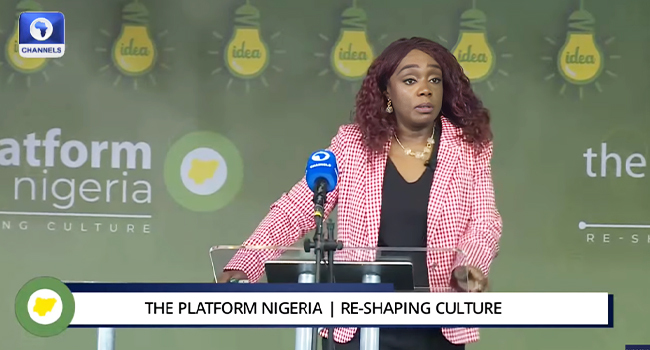
Lagos – Former Finance Minister Kemi Adeos Adeosun cautioned budding entrepreneurs at the 2026 edition of The Platform Nigeria, held in Lagos to mark Workers’ Day, that business failure should be viewed as a learning tool rather than a career ending. Drawing on her own experience of launching nine ventures, six of which collapsed, Adeosun emphasized that setbacks are an inherent part of entrepreneurship and can reveal weaknesses that strengthen future ventures.
Speaking to an audience of young business owners and investors, Adeosun warned against the prevalent notion that success can only be achieved by founding a company. “That mindset is risky and misleading,” she said, adding that even promising ideas must pass rigorous tests before they can become viable enterprises.
Adeosun outlined four “laws” that determine a business’s chances of success: market, numbers, timing, and team. She explained that entrepreneurs must first validate real demand by identifying who will pay for a product or service and why. “Understanding the revenue stream, costs and profit margins is essential,” she noted, underscoring the need for solid financial fundamentals.
Timing, according to Adeosun, dictates whether a startup leads or follows in a competitive landscape. She cited examples where early market entry secured advantage, while delayed launches missed opportunities. The final law, the team, received particular emphasis. “Moses needed Aaron. Every founder needs a team,” she said, stressing that no entrepreneur can succeed in isolation. Building a capable, cohesive team, she argued, is critical for executing vision and sustaining growth.
Beyond the four laws, Adeosun urged entrepreneurs to conduct thorough research and maintain financial literacy. “Do your research with wisdom. Some things are not what they seem; that is why knowing your numbers will help you,” she advised, cautioning against decisions based solely on hype or superficial data.
The former minister also highlighted the role of preparation and personal discipline. She encouraged young Nigerians to combine diligent planning with prayer, suggesting that spiritual grounding can complement practical efforts in the entrepreneurial journey.
Adeosun’s remarks reflect a broader shift in Nigeria’s startup ecosystem, where government officials and private sector leaders are increasingly promoting resilience and evidence‑based approaches. Her candid disclosure of multiple business failures aims to destigmatize loss and foster a culture where learning from mistakes is accepted as a pathway to innovation.
The Platform Nigeria event, organized by The Platform, continues to serve as a forum for thought leaders to share insights on economic development and job creation. Adeosun’s contribution adds a pragmatic perspective to ongoing discussions about how Nigeria can nurture a new generation of entrepreneurs capable of driving sustainable growth.




Comments are closed for this story.