
Nigeria’s 46th Workers’ Day falls amid a series of government actions that suggest a shift toward greater accountability, analysts say.
The Lagos‑Calabar Coastal Highway, a 700‑km project slated to link Victoria Island in Lagos with Calabar in Cross River State, has moved beyond the scepticism that greeted its 2024 announcement. By March 2025 the first 47 km segment from Ahmadu Bello Way to the eastern suburbs was near completion, and more than N15 billion in compensation had been paid to displaced property owners. The section was formally commissioned in May 2025 and a critical stretch opened for traffic during the Christmas period, officials reported. While concerns about procurement and forced evictions remain, the project is proceeding and is expected to address the estimated annual loss of $7.8 billion caused by poor road infrastructure.
In the financial sector, the Central Bank of Nigeria (CBN) announced the successful conclusion of its Banking Sector Recapitalisation Programme. Launched in March 2024 by Governor Olayemi Cardoso, the programme required commercial banks to raise capital ten‑fold, from N50 billion to N500 billion for international banks, and proportionally for domestic institutions. Over a 24‑month period Nigerian banks mobilised N4.65 trillion, of which about 28 % came from foreign investors, signalling renewed confidence in the system. Cardoso also introduced stricter corporate‑governance rules and reinforced insider‑lending restrictions, measures aimed at preventing repeats of past failures such as those involving Skye Bank and Heritage Bank, both of which were revoked for systemic misconduct.
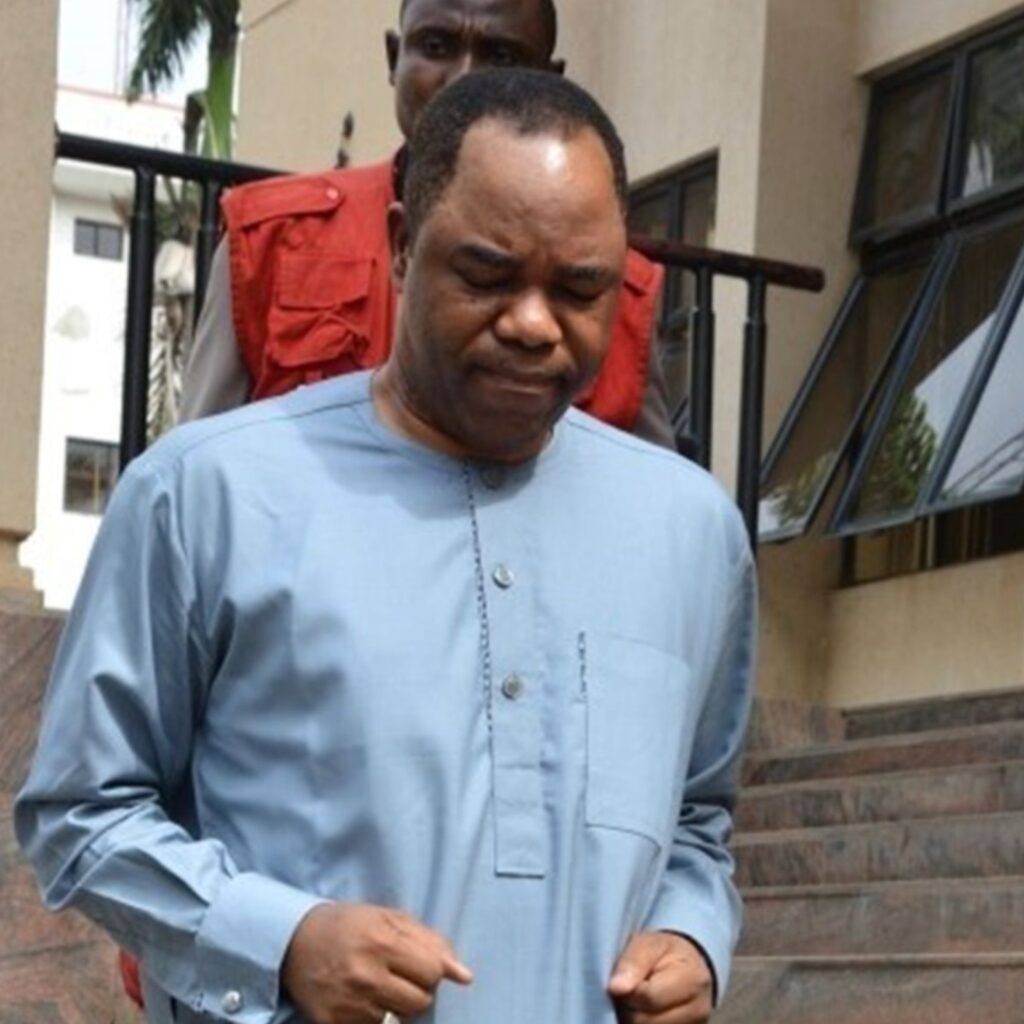
The anti‑corruption effort intensified with the arrest of former Skye Bank chairman Tunde Ayeni on 24 April 2026. Investigators allege Ayeni misused loan facilities to acquire government assets, including the former NITEL/MTEL telecommunications entities, through a complex network of twelve companies. The Economic and Financial Crimes Commission (EFCC) estimates the proceeds under investigation at N36.5 billion ($30 million). The case follows earlier high‑profile prosecutions, notably that of former Petroleum Minister Diezani Alison‑Madueke, whose assets abroad have been partially seized by U.S. authorities and the EFCC.
EFCC Chair Ola Olukoyede highlighted a record 4,111 convictions in 2024 and the recovery of over N500 billion in assets since the current administration began. The commission’s renewed focus on asset recovery and forfeiture suggests an institutional shift toward sustained enforcement.
Collectively, the progress on the coastal highway, the CBN’s recapitalisation outcome, and the EFCC’s prosecutorial actions illustrate an emerging pattern of tangible accountability in Nigeria. Observers note that while challenges in governance and implementation persist, these developments signal a departure from the long‑standing perception that public office and large‑scale projects are immune to scrutiny. The next steps will involve monitoring the highway’s full completion, ensuring the durability of banking reforms, and assessing the long‑term impact of anti‑corruption prosecutions on Nigeria’s investment climate and public trust.

Comments are closed for this story.