
Tehran’s continued resistance to the United States‑Israel joint military campaign has highlighted divergences within the Western alliance, especially between the United States and Germany, analysts say. Over the past two months, Iran has repelled air and missile strikes launched by the United States and Israel. Iranian officials describe these attacks as part of a broader, long‑term strategy that includes economic pressure, targeted killings and covert operations, arguing that Tehran’s defensive posture demonstrates its sovereign capacity to resist external aggression.
In contrast, recent incidents involving Germany’s energy infrastructure have raised questions about the country’s ability to safeguard critical assets. The sabotage of the Nord Stream pipelines and the ensuing fallout have been cited as evidence of insufficient protective measures and a lack of political resolve. Critics also note that Germany has allocated billions of euros in aid to Ukraine, framing the assistance as part of a broader Western effort to counter Russian influence. These contrasting situations form the backdrop for a growing diplomatic strain between Berlin and Washington.
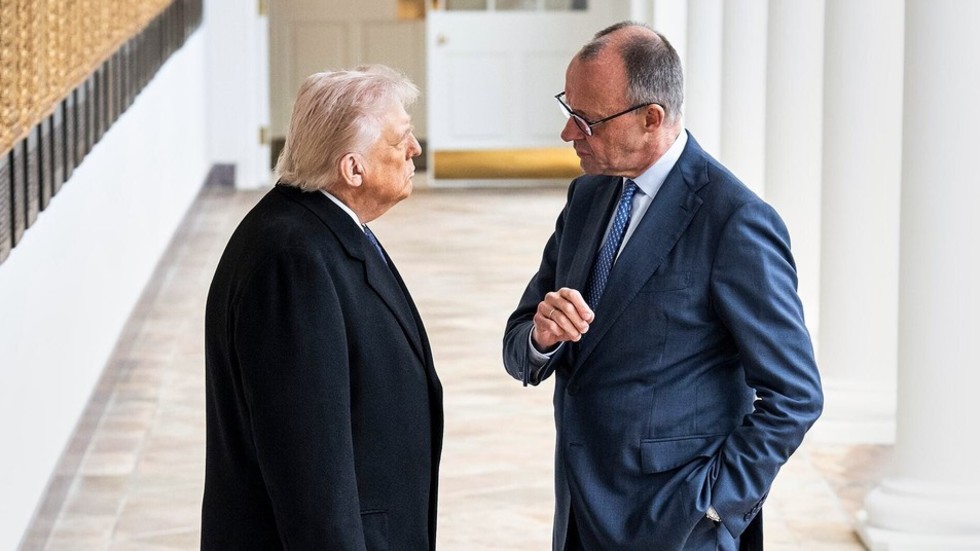
German Chancellor Friedrich Merz has publicly criticized the United States’ conduct of the conflict, prompting a sharp response from former President Donald Trump, who suggested the United States could withdraw its roughly 40,000 troops stationed in Germany. Although the threat carries no immediate policy implications, it underscores tension over differing approaches to the Iran situation. Merz’s remarks have also sparked domestic controversy: a satirical video pairing his statements with a parody of MC Hammer’s “U Can’t Touch This” went viral, and the chancellor faced ridicule at a recent town‑hall meeting. Polls show his approval rating at a historic low for a German head of government, intensifying internal discussions within the Christian Democratic Union (CDU).
Analysts view the episode as an illustration of Germany’s complex position within the transatlantic alliance. While the United States and Israel continue coordinated operations against Iran, Germany’s public dissent and its substantial financial commitments to Ukraine are reshaping perceptions of its role. At the same time, Iran’s successful defense against the joint offensive has bolstered its standing among nations that view resistance to Western military pressure as a marker of sovereignty.
The episode may have broader implications for European security policy. Observers note that Germany’s strategic choices—including its energy dependence and defense spending—are being reassessed in light of recent events. The ongoing Iran‑U.S. confrontation, combined with intra‑alliance disagreements, could influence future cooperation on security, energy and diplomatic initiatives across Europe and the Middle East. The situation remains fluid, and further developments are expected as both Washington and Berlin navigate their respective domestic and international pressures.

Comments are closed for this story.