
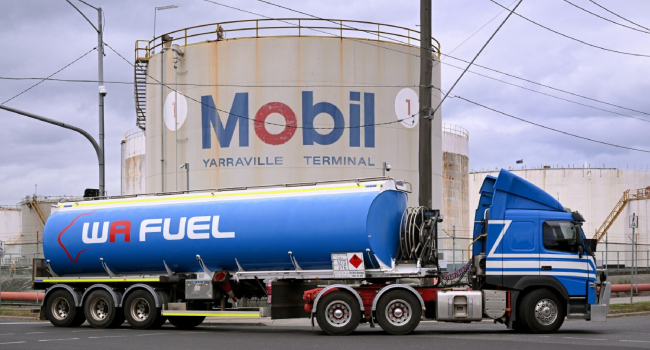
Australia will create a government‑run fuel reserve of one billion litres of diesel and aviation fuel to protect the country from potential shortages linked to the war in the Middle East, Prime Minister Anthony Albanese announced on Wednesday.
The reserve, the first of its kind in Australia, is intended to strengthen long‑term supply security for essential fuels. “Our number one priority remains shielding Australia from the worst effects of this crisis,” Albanese told reporters. The details of the programme will be outlined in the federal budget presentation scheduled for next week.
Australia is among the few International Energy Agency (IEA) members that does not currently maintain a national fuel stockpile, Energy Minister Chris Bowen said. “We have been looking at what we need to do to better prepare Australia for future shocks,” Bowen added. “We know the international environment is getting more unstable, not less.”
Geographically isolated and operating only two oil refineries, the nation is vulnerable to disruptions in global fuel supplies. Like many countries in Asia and the South Pacific, Australia depends heavily on crude and refined products transported through the Strait of Hormuz. At its peak, the narrow waterway handled about 20 percent of the world’s oil and gas shipments.
Since the United States and Israel launched strikes against Iran on 28 February, commercial traffic through the strait has virtually stopped, raising concerns about the reliability of imports. The reduction in flow has prompted policymakers to reconsider Australia’s exposure to external supply shocks.
The new stockpile will be managed by the government and financed through the upcoming budget. While precise funding figures have not been released, the initiative signals a shift toward greater strategic reserves, mirroring practices in other developed economies that maintain emergency fuel supplies.
Analysts note that a one‑billion‑litre reserve would cover a substantive portion of Australia’s aviation fuel consumption for several months and provide a buffer for diesel used in transport and industry. The move also aligns with broader national security strategies that seek to mitigate the impact of geopolitical volatility on critical infrastructure.
The announcement follows a period of heightened market sensitivity, with oil prices recently falling on hopes for a diplomatic de‑escalation in the Middle East. Australian markets responded positively, and the news of the reserve is expected to reinforce confidence among businesses and consumers alike.
As the budget deliberations approach, further specifics on the reserve’s storage locations, management framework, and funding mechanisms will be disclosed. The establishment of the stockpile marks a significant step in Australia’s effort to safeguard energy stability amid an increasingly unpredictable global environment.



Comments are closed for this story.