
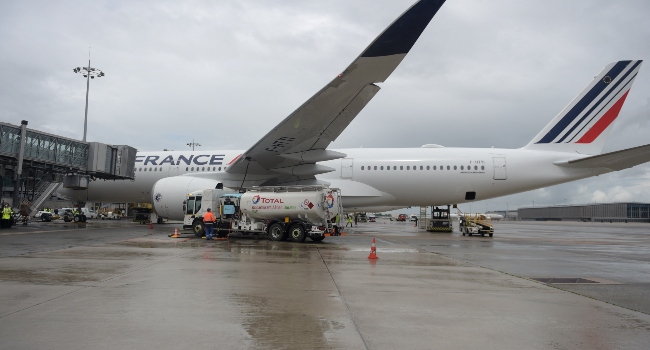
EU prepares for possible jet‑fuel shortages as Middle‑East tensions drive up prices
The war between Israel and Iran and the resulting closure of the Strait of Hormuz have caused a sharp increase in aviation‑fuel costs, prompting Brussels to review contingency plans for Europe’s summer travel season. The European Union is assessing the use of US‑produced Jet A fuel and a range of measures to optimise jet‑fuel consumption, but officials stress that no shortage has been declared yet.
The European Union Aviation Safety Agency (EASA) is scheduled to publish recommendations on the temporary approval of Jet A, a US kerosene blend that is not currently permitted in Europe because of its higher freezing point. Allowing its use would require regulatory adjustments and logistical preparations, according to EU transport commissioner Apostolos Tzitzikostas. Some airlines have asked for a short‑term exemption to mitigate the impact of soaring fuel prices.
At the same time, the European Commission will present a package of actions that member states can deploy to maximise fuel efficiency. The package is expected to relax “tankering” rules – the practice of carrying extra fuel to avoid higher prices at destination airports – and to grant temporary flexibility on airport slot allocations for carriers that are forced to relinquish slots due to fuel cost pressures. If the situation persists, the Commission may coordinate the release of emergency fuel reserves and encourage voluntary sharing of jet fuel among states.
Brussels has set up a “fuel observatory” to monitor production, imports, exports and stock levels of transport fuels across the bloc. The observatory, which will become operational in the coming days, will fill a data gap; EU legislation currently obliges members to hold oil stocks equal to 90 days of net imports and 61 days of domestic consumption, but does not differentiate between gasoline, diesel and jet fuel. Early assessments suggest that countries with limited refining capacity, such as Ireland, are more vulnerable, whereas nations like Finland appear better positioned.
Before the conflict, roughly 20 % of Europe’s kerosene passed through the Strait of Hormuz, a route now effectively closed. The price surge has already led several low‑cost carriers to cancel flights. EU energy commissioner Dan Jorgensen warned that while a supply shock has not yet materialised, “security of supply issues” could arise if the crisis continues.
In the longer term, EU officials link the current emergency to the broader need for sustainable aviation fuels (SAF). Aviation‑transport specialist Matteo Mirolo argued that the crisis should accelerate investment in non‑fossil SAF for both civil and military aviation, enhancing climate goals and energy sovereignty.
The EU’s next steps include finalising EASA’s guidance on Jet A, activating the fuel observatory and, if required, coordinating member‑state actions to safeguard jet‑fuel availability for the upcoming peak travel period.



Comments are closed for this story.