
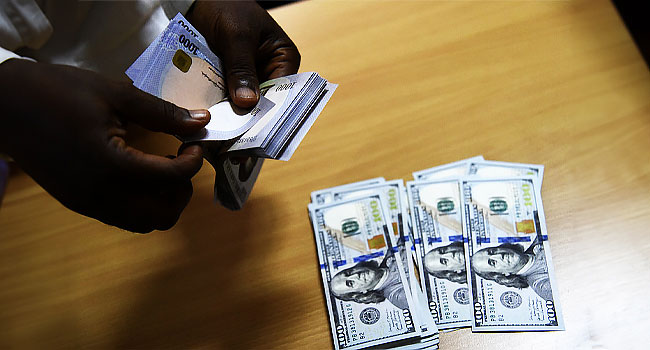
The Central Bank of Nigeria (CBN) reported that the naira edged stronger on Thursday, trading at approximately ₦1,361 per US dollar in the Nigerian Foreign Exchange Market (NFEM). The level marks a modest improvement from the ₦1,362 rate recorded in the previous session.
The official market also saw higher turnover, with increased trading volumes signalling more robust activity. Currency dealers linked the naira’s relative stability to the CBN’s ongoing policies aimed at expanding liquidity and dampening volatility in the foreign‑exchange market. Analysts added that persistent demand for dollars from importers, travelers and businesses continued to underpin the market.
In the broader foreign‑exchange arena, the US dollar weakened amid optimism that the conflict between Iran and the United States might de‑escalate. Iran announced on Wednesday that it was reviewing a US peace proposal that, if accepted, would formally end hostilities while leaving unresolved key US demands on Iran’s nuclear programme and the reopening of the Strait of Hormuz. The prospect of reduced geopolitical tension helped pull oil prices down nearly 8 % overnight, easing inflation concerns and pushing US Treasury yields lower as markets reassessed the risk of further rate hikes.
Despite the pullback, Brent crude futures remained elevated at $101.89 a barrel, well above pre‑war levels. The fall in oil prices lifted the euro, which is more sensitive to oil‑price movements than the US dollar. The euro rose 0.1 % to $1.1757, after reaching a two‑week high of $1.1797 the previous night.
The dollar index slipped to a low of 97.902, near the two‑week trough it had touched overnight and well below last week’s peak of 99.092. The Australian dollar inched higher, trading at $0.7242, just shy of the four‑year high it touched on Wednesday. The British pound held steady at $1.3594, having appreciated roughly 7 % since the start of 2024.
The Japanese yen received a further boost from speculation that authorities intervened on Wednesday to support the currency. The dollar fell to as low as 155.00 per yen, its strongest level in ten weeks, according to Reuters. By Thursday the dollar was trading at 156.15 yen, after Japan’s top currency diplomat Atsushi Mimura indicated that the country was not limited in its ability to intervene. US Treasury Secretary Scott Bessent is scheduled to meet Japanese Prime Minister Sanae Takaichi next week, with discussions expected to include measures to curb speculative yen selling.
These developments highlight the interconnectedness of geopolitical events, commodity prices and currency markets. Continued monitoring of the Iran‑US diplomatic process and central‑bank actions will be critical for assessing future movements in the naira, the dollar and other major currencies.



Comments are closed for this story.