
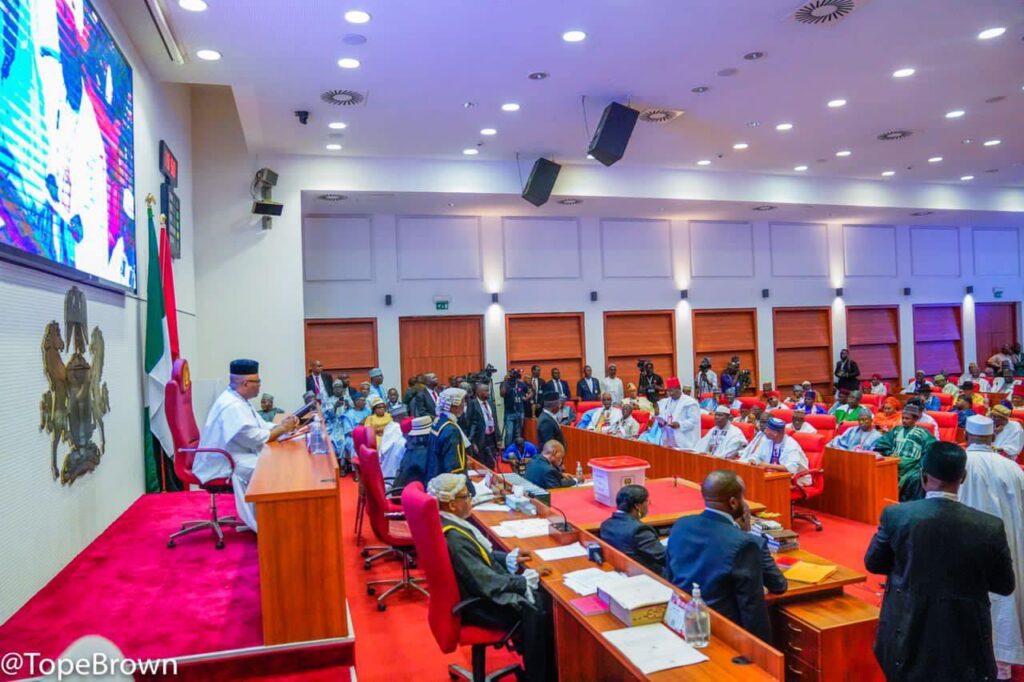
The Senate on Thursday passed the 2026 Electoral Act Amendment Bill, which seeks to clarify the jurisdiction of courts over pre‑election disputes. The legislation was moved after Chairman of the Senate Committee on INEC, Senator Simon Lalong (APC‑Plateau), presented a committee report to the plenary.
The amendment targets gaps in the existing legal framework that have led to inconsistent court rulings and prolonged resolution of pre‑election matters. Lalong argued that uncertainty over which court may hear cases involving party primaries, nominations and other pre‑election issues undermines the credibility of the electoral process and creates opportunities for forum shopping and contradictory judgments.
Key provisions of the bill include:
Amendment to Section 29(5) – Aspirants may now file a suit either in the Federal Capital Territory or in the jurisdiction where the cause of action arose. This change aims to reduce logistical burdens on litigants and align legal proceedings with the geographic realities of political contests.
Insertion of Section 29A – The new section establishes a clear jurisdictional hierarchy for pre‑election disputes. Matters concerning elections to the National Assembly, governorships and state houses of assembly will originate in Federal High Courts, with appeals to the Court of Appeal. Disputes related to presidential and vice‑presidential elections will originate in the Court of Appeal, with further appeals to the Supreme Court.
Lalong emphasized that the structure reflects constitutional logic and the doctrine of judicial hierarchy. By assigning presidential pre‑election cases to the Court of Appeal, the bill seeks a faster determination by a court with nationwide reach and capacity, while Federal High Courts will handle other federal elections, promoting specialization and consistency.
The bill also seeks to curb the practice of filing parallel suits in multiple jurisdictions, a tactic that has eroded public confidence in the judiciary and contributed to electoral instability. Section 29A would prohibit courts from entertaining pre‑election matters outside the prescribed framework, introducing procedural discipline and predictability.
Senator Mohammed Monguno (APC‑Borno), who seconded the motion, described the amendment as “apt and germane,” noting that it should improve the overall experience of electoral litigation in Nigeria. Senate President Godswill Akpabio praised the committee’s work and expressed confidence that President Bola Tinubu will assente the bill, adding that the legislation will deepen democratic governance.
If signed into law, the amendment will provide a definitive judicial pathway for pre‑election disputes, aiming to reduce delays, enhance efficiency and strengthen public trust in Nigeria’s electoral system. The bill now proceeds to the presidential desk for assent.


Comments are closed for this story.