
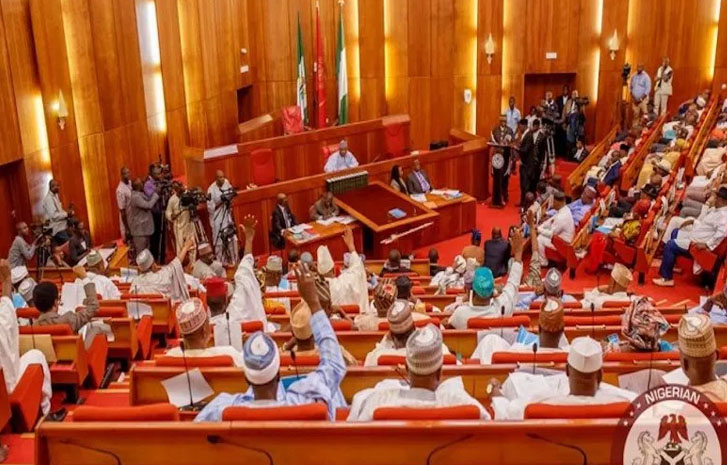
ABUJA — The Nigerian Senate approved the 2026 Statutory Appropriation Bill for the Federal Capital Territory (FCT) on Thursday, authorising a total expenditure of N2.285 trillion for the administration and development of Abuja and its satellite towns. The approval followed the plenary presentation of the harmonised report from the Senate and House of Representatives committees on the FCT. Vice‑Chairman of the Senate Committee on the FCT, Austin Akobundu, delivered the report on behalf of Committee Chairman Ibrahim Bomai.
The committees recommended the N2.285 trillion budget based on a projected revenue estimate of N2.385 trillion. According to the report, the allocation comprises N165.7 billion for personnel costs, N378.2 billion for overhead, and N1.741 trillion for capital projects across the territory. The budget structure places 76.19 percent of the total on capital expenditure, while recurrent spending accounts for 23.8 percent. Akobundu noted that the appropriation complies with constitutional requirements and reflects extensive consultations between the joint committees and officials of the Federal Capital Territory Administration (FCTA). “The committees met with the minister and other relevant officials of the FCTA and deliberated extensively on the subject matter,” he said.
Lawmakers who participated in the debate described the budget as balanced and development‑oriented, emphasizing its potential to accelerate infrastructure development and improve security in Abuja and surrounding areas. Deputy Senate President Barau Jibrin praised the plan as “top‑notch,” citing his experience chairing appropriation committees in both chambers of the National Assembly. “A budget with N2.2 trillion total and N1.7 trillion earmarked for capital projects demonstrates the minister’s willingness and determination to enhance the FCT,” he remarked. Senator Abdul Ningi also commended the package, calling it well‑packaged and balanced, and noting that it addressed observations raised by the Senate Committee on the FCT during previous budget reviews.
The enactment of the 2026 statutory budget provides a financial framework for the FCTA to implement major projects, including road networks, housing, water supply, and security infrastructure. With capital spending constituting more than three‑quarters of the total allocation, the legislature signals a strong policy focus on long‑term development in the nation’s capital. The bill now proceeds to the President for assent, after which the allocated funds will be released to the FCTA for immediate deployment. The successful passage underscores the Senate’s role in overseeing fiscal policy for the Federal Capital Territory and sets the stage for the upcoming fiscal year’s development agenda.

![Troops, terrorists exchange gunfire in Kogi [VIDEO]](https://mediatalkafrica.com/wp-content/uploads/2026/01/Terrorists-Exchange-Gunfire-With-Nigerian-Troops-In-Kogi-State-768x576.jpeg)


Comments are closed for this story.