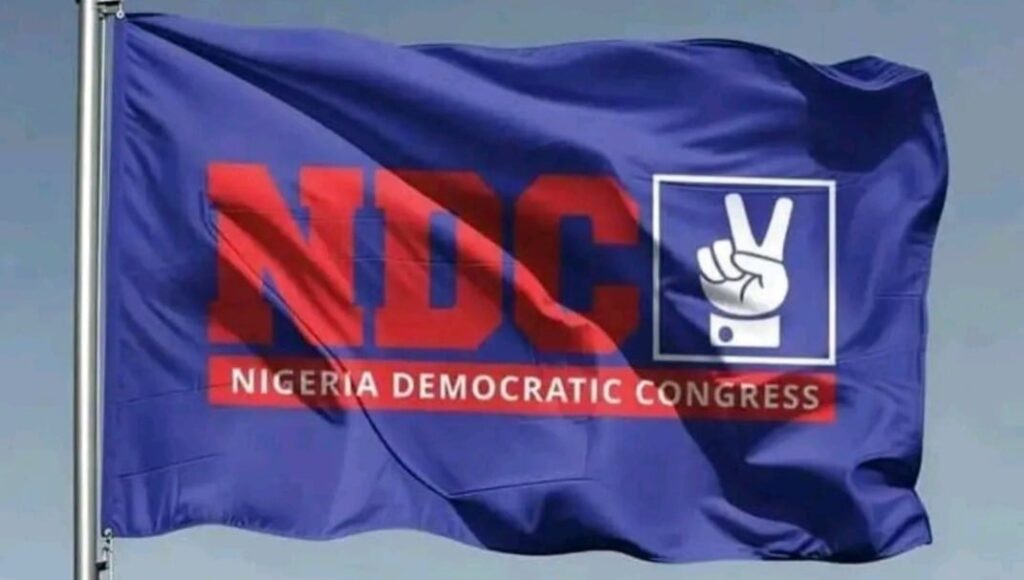
The Nigeria Democratic Congress (NDC) has reiterated its pledge to integrate women, youth and persons living with disabilities (PWDs) fully into Nigeria’s electoral process and to encourage their participation as candidates in forthcoming general elections.
In a statement signed by the party’s National Secretary, Barrister Ikenna Morgan Enekweizu, the NDC emphasized that age, financial status or physical impairment should not preclude any Nigerian from contributing to nation‑building. “The fact that someone is young, may not be a money‑bag, or is disadvantaged by a physical disability should not shut him or her out of the democratic process,” Enekweizu said.
The party argues that cultural norms and systemic barriers have historically limited women’s political engagement, leaving them on the “short end of the democracy stick.” To counteract this, the NDC is introducing affirmative‑action measures aimed at boosting women’s candidacy. “Excluding roughly half of the population – women – would be a disservice to the nation,” the statement added.
Accordingly, the NDC announced discounted fees for aspirants. Female candidates will pay half of the advertised costs for both the Expression of Interest (EOI) and Nomination Forms. Young aspirants aged 18 to 35 will also receive a 50 percent reduction, while PWDs will be charged only 25 percent of the standard fees.
Procedurally, the party clarified that forms for presidential, governorship and national‑assembly contests must be collected at the NDC’s National Secretariat in Abuja, whereas state‑assembly forms are available at the respective state offices.
The announcement aligns with the NDC’s broader promise to represent every Nigerian, both within the country and in the diaspora, in the political arena. By lowering financial barriers and explicitly targeting under‑represented groups, the party hopes to expand the pool of candidates and foster a more inclusive democratic culture.
Observers note that such measures could set a precedent for other political formations in Nigeria, where women and youth have long struggled for equitable representation. The upcoming elections will test whether these incentives translate into an increased number of diverse candidates on the ballot and whether they influence voter participation across the nation’s varied constituencies.
![Osun Election: Adeleke receives Certificate of Return [VIDEO]](https://mediatalkafrica.com/wp-content/uploads/2026/08/Ademola-Adeleke-Receives-Certificate-of-Return-After-Osun-Win-768x461.jpg)