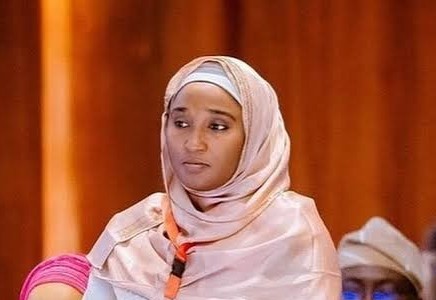
Kano – The Minister of State for Education, Prof. Suwaiba Ahmad, reaffirmed the federal government’s commitment to ensuring that no Nigerian child is denied education because of poverty. Speaking during a Friday inspection of schools participating in the AGILE programme, Ahmad highlighted a series of policy measures that have expanded access to schooling and reduced the financial burden on students and their families.
The minister pointed to the Nigeria Education Loan Fund as a cornerstone of the government’s support for tertiary students, noting that the scheme now covers tuition, transportation, daily subsistence and learning materials. “Poverty is no longer an excuse for missing school,” Ahmad said. She urged especially female students to take full advantage of the incentives, adding that free online skills programmes and monthly stipends are being provided to foster youth entrepreneurship after academic training.
During the visit to Government Girls College and Government Girls Secondary School, Dukawuya, Ahmad assessed the condition of classrooms, laboratories and sanitation facilities. She identified gaps in the renovations and ordered school principals and management committees to remedy the shortcomings within three weeks. The minister also warned against locking laboratories and computer centres that are intended for student use, and said she would brief Kano State Governor Abba Kabir Yusuf on the findings.
Kano State’s Commissioner for Education, Ali Makoda, outlined parallel state‑level investments. The state has approved contracts amounting to ₦24 billion for the construction of 49 new schools and the renovation of 300 existing ones, and education now accounts for more than 30 percent of Kano’s budget since 2023.
AGILE National Coordinator Amina Buba Haruna reported that 100 schools in Kano have already been equipped with solar‑powered digital learning facilities, and approvals are underway for an additional 180 schools in the programme’s expansion phase. Haruna also announced plans to establish 89 new girls’ secondary schools within the next year, a move she said aligns with the World Bank‑backed AGILE project’s objective of improving girls’ access to quality education.
The minister’s remarks underscore a broader federal strategy that couples financial assistance with infrastructural upgrades to remove barriers to learning. By linking loan funds, stipends and skills training with concrete improvements in school environments, the government aims to create a more inclusive education system. Ahmad expressed confidence that Kano’s authorities will act swiftly on the recommendations, reinforcing the shared commitment of federal and state governments to sustain momentum toward universal, gender‑responsive education.