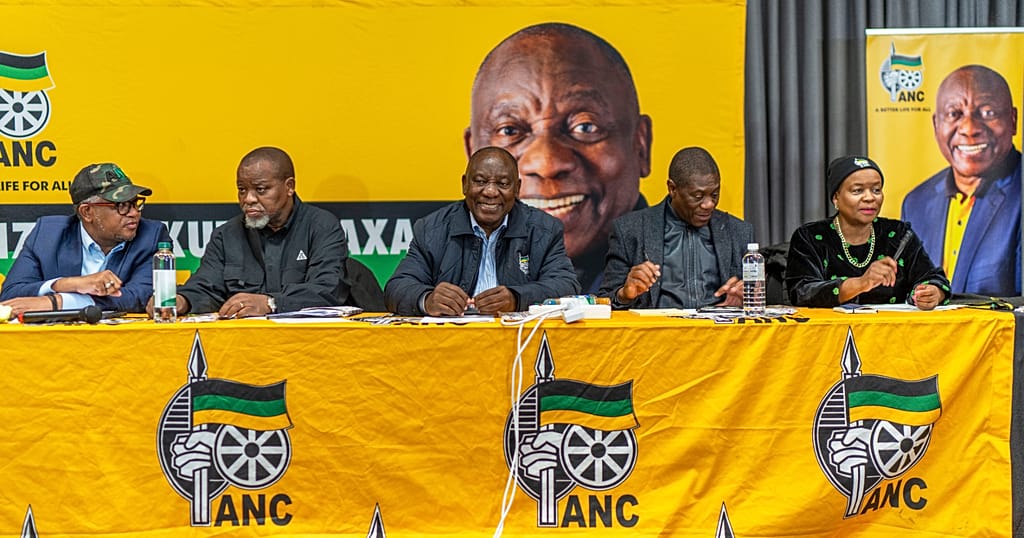
South African President Cyril Ramaphosa has received an unequivocal endorsement from his own party as the opposition continues to call for his resignation over an alleged failure to report a large theft at his private game reserve.
The African National Congress (ANC) reiterated its support for the president on Tuesday, with Secretary General Fikile Mbalula emphasizing that the recent Constitutional Court ruling did not constitute an impeachment or a finding of guilt. “The Court did not order an impeachment trial, nor did it find the president guilty or direct his removal from office. It also did not endorse the findings of the Section 89 independent panel,” Mbalula said.
The court’s decision, delivered last week, clarified that an impeachment process that was stalled by parliament in 2022 may still proceed. Parliament has since formed an impeachment committee to examine the case, but Ramaphosa has publicly ruled out stepping down.
The controversy centers on accusations that Ramaphosa did not inform police about a theft of substantial sums of money from his game reserve four years ago. Opposition parties have seized on the allegation, demanding accountability and urging the parliamentary process to move forward. The ANC, however, has framed the court’s judgment as a vindication of the president’s status and a reminder that procedural rules, not political pressure, should guide the impeachment debate.
The situation highlights a rare moment of friction between South Africa’s ruling party and its opposition, with the nation’s highest court playing a pivotal role in delineating the limits of parliamentary authority. While the impeachment committee’s work is now underway, the ANC’s statement underscores that the president retains the full confidence of his party and is unlikely to resign voluntarily.
As the impeachment inquiry advances, observers will watch closely how the parliamentary proceedings interact with the ongoing legal scrutiny. The outcome could set a significant precedent for how allegations of misconduct against a sitting president are handled in South Africa’s constitutional framework.
The next step for the impeachment committee is to convene hearings, gather evidence and determine whether the charges merit a formal vote in the National Assembly. The process is expected to unfold over the coming weeks, with both domestic and regional stakeholders monitoring the developments for implications on governance standards and political stability in the region.