
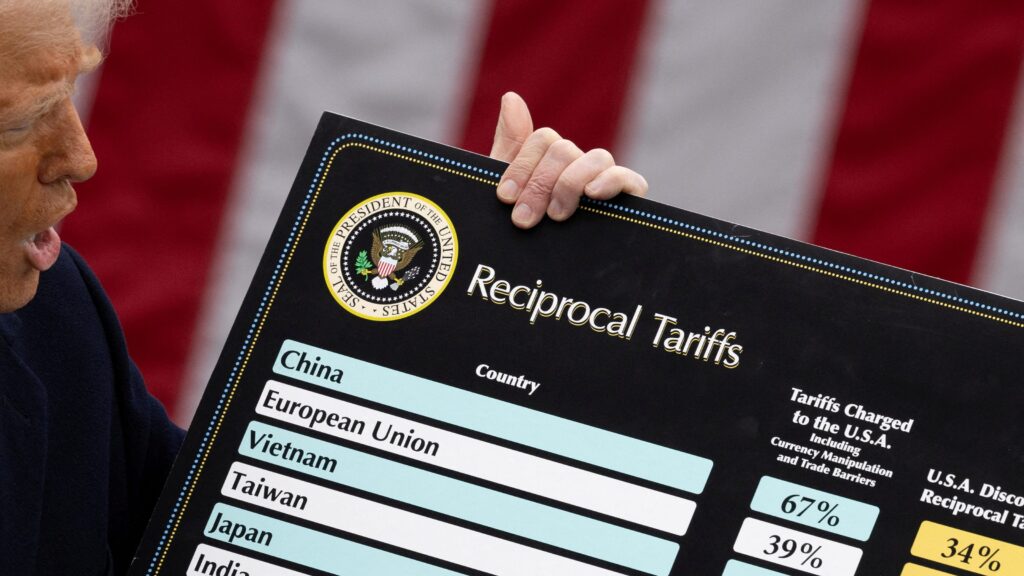
A massive pile of cash is heading back to Corporate America. After the U.S. Supreme Court struck down tariffs imposed under the International Emergency Economic Powers Act, or IEEPA, companies are lining up to reclaim billions of dollars they paid to the government. U.S. Customs and Border Protection has already started processing refund claims for the $166 billion that’s potentially up for grabs. But a deep dive by USA TODAY into more than 630 Securities and Exchange Commission filings reveals a stark reality: only a handful of the biggest players are promising to pass that money back to the people who actually felt the sting at the register.
Ford is eyeing a $1.3 billion refund. General Motors is looking at $500 million. UPS is also in line for $500 million. Yet of those three, only UPS has publicly committed to returning the cash to its customers. The company says it will disburse refunds 60 to 90 days after receiving the funds from CBP. Most others are keeping the money to pay down debt, cut supply costs, or reinvest in their own operations. It’s a quiet windfall for the corporate bottom line, but for the average shopper, the question hangs heavy: will any of this ever make its way into your pocket?
Alfredo Carrillo Obregon, a policy analyst at the Cato Institute, puts it bluntly. Companies will only hand over tariff refunds to consumers if they choose to, or if a court forces them to. Take Cardinal Health, a medical supply giant that paid about $200 million in tariffs and passed some of those costs along to its customers. Now, in its SEC filings, the company says it will return any portion of the refund tied to price increases it passed through during the tariff period. But Cardinal Health’s customers are businesses, hospitals, and pharmacies. Whether any savings trickle down to the end consumer is anyone’s guess. The company didn’t respond to requests for comment.
FedEx is also expecting a recovery, though it hasn’t specified how much. Like UPS, it plans to pass money on to customers. Amelia Ables, a FedEx communications advisor, said in an email that the company is fully committed to refunding any applicable duties, including interest received from CBP. Still, of the $166 billion on the table, U.S. consumers are unlikely to see much of the reclaimed money land in their pockets. Earlier, President Trump had floated the idea of using tariff revenue to send $2,000 checks to Americans, but those plans never materialized.
Stefan Reisinger, a partner at the law firm Norton Rose Fulbright, explains the cold reality. The only remedies available are contractual rights. And the everyday Joe and Sally consumer doesn’t have a contractual right against the company they’re buying from. The refunds are focused on the importers who paid the tariffs to the government. What those importers did with the tariff expense varies dramatically, says Ted Murphy, a partner at Sidley Austin. Some companies just ate the cost. Others passed it on to their customers.
Because there’s no general right to a refund for consumers, some have started filing claims against the importing companies that raised costs. Costco and Nike are both facing lawsuits. Even if companies don’t explicitly return the refunds, some say they’ll use the money to benefit consumers indirectly. On a May earnings call, Walmart’s executive vice president and chief financial officer, John David Rainey, said the company would invest its refund in lowering prices. He noted the refund amounts to less than half of 1% of Walmart’s U.S. annual sales, which CNBC estimated at around $2.42 billion.
The Home Depot has also started receiving refunds, though it hasn’t disclosed the total amount. Sarah McDonald, a company spokesperson, said in a statement that the goal is to maintain the best value for customers. The refunds will be used to offset costs from incremental tariffs and other cost pressures. Still, the impact on consumers is clear. An April Federal Reserve study on the effect of tariffs showed that sweeping tariffs kept prices elevated for core goods like cars and furniture.
The push by major companies to reclaim tariff payments comes despite a warning from President Trump. When he appeared on CNBC’s “Squawk Box” in April, he said it was “brilliant” if companies chose not to apply for refunds. He added, “If they don’t do that, I’ll remember them.” But that hasn’t stopped the largest U.S. companies from pursuing what they’re owed. Customs and Border Protection launched a tariff refund portal on April 20, and as of May 22, the agency had processed over 15 million entries and accepted claims worth $85 billion.
Apple, which had initially held off, said in its May filings that it is seeking refunds but hasn’t disclosed the amount. The company previously said it had paid $3.3 billion in tariffs during the second Trump administration. Some companies are even selling their refund rights to investors. Children’s Place sold $38.2 million in refund claims to an investment firm for $25.7 million, or 67 cents on the dollar. Accuray sold its $9 million in claims for $6.6 million. GoPro sold about $19.4 million in refund rights to a lender.
But beyond the billion-dollar giants, small businesses have also been hit hard. The Justice Department is appealing the court order that compelled the government to reimburse companies. If successful, it could mean some businesses would have to file individual lawsuits, an expensive process. The IEEPA tariffs are just one set of tariffs businesses are dealing with. After the Supreme Court ruling, President Trump announced other sweeping tariffs, some of which were recently also deemed invalid.
Carrillo Obregon sums it up. At the end of the day, the government took money from American importers under tariffs the Supreme Court declared illegal. It really shouldn’t be that hard for the government to give back the money these companies are rightfully entitled to. But the refund process isn’t going as smoothly as it should, and more hurdles are likely ahead.



Comments are closed for this story.